
A Strategic Look at Leading Ultrasound Providers in the Richmond Metro
The Richmond, Virginia metropolitan area has emerged as a dynamic hub for women’s healthcare innovation, where leading health systems, academic medical centers, and specialty practices are leveraging advanced ultrasound technologies to elevate care delivery. As patient expectations evolve and clinical complexity increases—particularly in obstetrics, gynecology, and maternal-fetal medicine—ultrasound has become a cornerstone of diagnostic precision, care coordination, and patient engagement.
Across Central Virginia, providers are not only expanding access to high-resolution imaging but also integrating ultrasound into multidisciplinary care pathways that support earlier detection, improved outcomes, and more personalized patient experiences. This regional overview highlights how Richmond’s leading women’s health ultrasound providers are shaping the future of imaging excellence.
The Richmond Healthcare Landscape: A Foundation for Innovation
Richmond’s healthcare ecosystem is anchored by a mix of academic medicine, regional health systems, and community-based specialty groups. Organizations such as VCU Health, Bon Secours Mercy Health, and HCA Virginia Health System play a central role in advancing women’s imaging capabilities across the region.
These institutions collectively serve a diverse patient population spanning urban, suburban, and rural communities. As a result, imaging strategies must balance accessibility with clinical sophistication—ensuring that both routine and high-risk patients benefit from consistent, high-quality ultrasound services.
Ultrasound, in particular, has become a unifying modality across these systems, supporting everything from routine prenatal visits to complex maternal-fetal diagnostics and gynecologic evaluations.
Academic Leadership in Maternal-Fetal Imaging
At the forefront of innovation is VCU Health, whose academic infrastructure supports advanced research, subspecialty care, and physician training. Within its maternal-fetal medicine (MFM) programs, ultrasound plays a pivotal role in managing high-risk pregnancies, including cases involving fetal anomalies, multiple gestations, and maternal comorbidities.
Key areas of advancement include:
- High-resolution fetal imaging: Enhanced visualization enables earlier and more accurate detection of structural abnormalities.
- Integration with genetic screening: Ultrasound findings are increasingly paired with non-invasive prenatal testing (NIPT) and other genomic tools.
- Multidisciplinary care models: Imaging data feeds directly into coordinated care teams, including neonatology, pediatric surgery, and genetics.
This academic approach not only improves patient outcomes but also establishes best practices that influence community providers across the region.
Expanding Access Through Regional Health Systems
Health systems such as Bon Secours Mercy Health and HCA Virginia Health System are playing a critical role in scaling ultrasound access throughout the Richmond metro area.
Bon Secours Mercy Health: Community-Focused Imaging Excellence
Bon Secours facilities throughout Richmond emphasize patient-centered imaging environments, where ultrasound is integrated into comprehensive women’s health services. Their approach includes:
- Standardized imaging protocols across multiple sites to ensure consistency
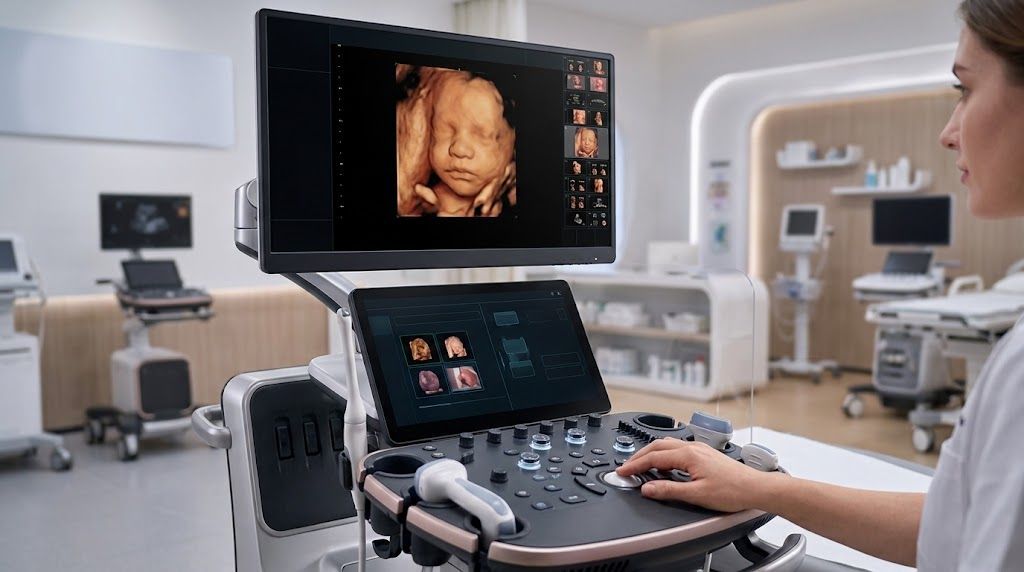
- Investment in 3D/4D ultrasound technologies to enhance both clinical insight and patient experience
- Streamlined scheduling and access, reducing barriers to timely care
By aligning imaging services with broader OB/GYN and women’s health offerings, Bon Secours is helping to close gaps in access—particularly for underserved populations.
HCA Virginia Health System: Operational Scale and Efficiency
HCA Virginia Health System brings a large-scale operational model that prioritizes efficiency, throughput, and clinical standardization. In the context of ultrasound, this translates to:
- High-volume imaging capabilities supported by optimized workflows
- Centralized data systems that enable rapid image sharing and interpretation
- Continuous technology upgrades to maintain diagnostic accuracy
This system-wide approach ensures that ultrasound remains both accessible and reliable, even as patient volumes grow.
The Role of Independent OB/GYN and Specialty Practices
Beyond large health systems, Richmond’s women’s health landscape is enriched by independent OB/GYN groups and specialty practices that deliver highly personalized care. These providers often serve as the first point of contact for patients and play a critical role in integrating ultrasound into routine and preventive care.
In many of these practices, ultrasound is embedded directly within the clinical setting, enabling:
- Same-day imaging and consultation, reducing delays in diagnosis
- Continuity of care, as providers interpret imaging within the broader clinical context
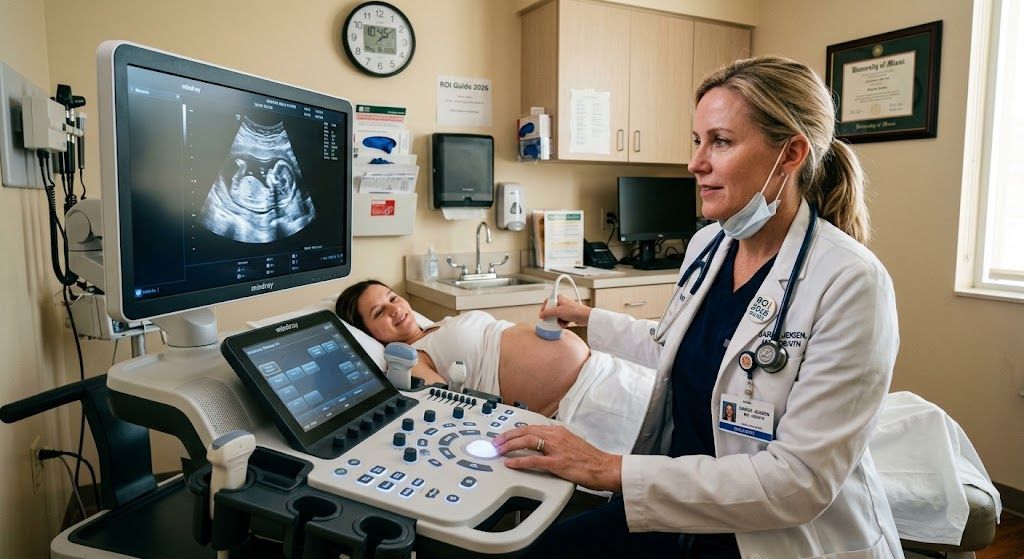
- Enhanced patient engagement, particularly through real-time visualization during exams
This model is especially impactful in gynecologic care, where ultrasound supports the evaluation of conditions such as fibroids, ovarian cysts, and abnormal bleeding.
Advancements in Ultrasound Technology Across the Region
Richmond providers are increasingly adopting next-generation ultrasound technologies that expand the modality’s clinical capabilities and operational value.
3D/4D Imaging and Patient Experience
3D and 4D ultrasound technologies are now widely available across leading practices, offering:
- Improved visualization of fetal anatomy
- Enhanced patient understanding and emotional connection
- Greater diagnostic confidence in certain clinical scenarios
While these technologies are often associated with patient experience, their clinical applications—particularly in detecting facial and skeletal anomalies—are equally significant.
AI-Assisted Imaging Workflows
Artificial intelligence is beginning to influence ultrasound workflows in Richmond, particularly in:
- Automated measurements and image optimization
- Decision support tools for sonographers and physicians
- Quality assurance and standardization across imaging sites
These tools help reduce variability, improve efficiency, and support more consistent diagnostic outcomes.
Portable and Point-of-Care Ultrasound
The adoption of portable ultrasound devices is expanding access in both hospital and outpatient settings. These systems enable:
- Bedside imaging in labor and delivery units
- Rapid assessments in emergency and urgent care environments
- Greater flexibility for providers in community-based practices
As portability improves, ultrasound is becoming an even more integral part of real-time clinical decision-making.
Breast Imaging and the Expanding Role of Ultrasound
While mammography remains the primary screening tool for breast cancer, ultrasound is playing an increasingly important complementary role in Richmond’s imaging landscape.
Providers across major systems and specialty centers are using ultrasound to:
- Evaluate dense breast tissue
- Characterize lesions detected on mammography
- Guide interventional procedures such as biopsies
The integration of breast ultrasound into comprehensive imaging programs reflects a broader trend toward multimodal diagnostics, where each modality contributes unique strengths.
Workforce Development and Sonographer Expertise
Technology alone does not drive imaging excellence—skilled sonographers and imaging specialists are essential. Richmond’s leading providers are investing in:
- Ongoing training and certification programs
- Collaboration with academic institutions, including VCU Health
- Career development pathways to attract and retain top talent
These efforts ensure that ultrasound services are delivered with the highest levels of accuracy, consistency, and patient care.
Data Integration and the Future of Imaging
As healthcare systems in Richmond continue to digitize, ultrasound is becoming more deeply integrated into enterprise data ecosystems. This includes:
- Seamless integration with electronic health records (EHRs)
- Advanced analytics for performance tracking and quality improvement
- Interoperability across care settings, enabling better coordination
These capabilities not only enhance clinical decision-making but also support operational efficiency and long-term strategic planning.
A Strategic Opportunity for Imaging Advancement
The Richmond metro area represents a compelling example of how diverse healthcare organizations can collectively advance women’s health imaging. From academic innovation at VCU Health to the community-focused care models of Bon Secours Mercy Health and the operational scale of HCA Virginia Health System, the region demonstrates a shared commitment to improving access, quality, and patient outcomes.
For healthcare leaders, the opportunity lies in continuing to invest in ultrasound technologies, workforce development, and integrated care models that maximize the value of imaging across the continuum of care.
Partnering for the Next Phase of Growth
As ultrasound technology continues to evolve, healthcare organizations must navigate complex decisions around equipment selection, workflow optimization, and long-term imaging strategy. Preferred Medical works alongside providers to support these efforts—offering guidance on technology deployment, operational alignment, and scalable imaging solutions tailored to the unique needs of each organization.
In a market like Richmond—where innovation, access, and clinical excellence intersect—the ability to strategically align imaging capabilities with broader organizational goals will define the next generation of women’s healthcare delivery.
Healthcare leaders seeking to enhance their ultrasound programs, improve patient access, and future-proof their imaging infrastructure are encouraged to engage with Preferred Medical for strategic consultation and partnership opportunities.



Should You Buy, Finance, or Lease an OB/GYN Ultrasound Machine in 2026? A Practice Acquisition Guide

How Many Scans Does It Take to Pay for an OB/GYN Ultrasound Machine? A 2026 ROI and Break-Even Guide