
How to Compare OB/GYN Ultrasound Machine Quotes in 2026: A 15-Point Buyer’s Checklist
Once an OB/GYN practice, maternal-fetal medicine program, fertility clinic, or women’s imaging center has narrowed its ultrasound options, a new challenge begins: comparing the proposals.
Two ultrasound quotes can appear similar on the first page while representing very different clinical configurations, support commitments, implementation requirements, and long-term costs. One proposal may include the transducers, software, applications training, connectivity, and warranty needed for the practice’s actual workflow. Another may show a lower equipment price but leave several of those items as options, exclusions, or future expenses.
That is why the lowest quoted price is not necessarily the lowest-cost ultrasound investment.
The objective is to make every proposal answer the same question:
What exactly will our organization receive, what clinical work will the configuration support, what will be required to put it into productive use, and what will ownership look like after installation?
For practices that have already reviewed when to replace a system, how to choose an OB/GYN ultrasound platform, what ownership may cost, and how many examinations may be required to support the investment, quote comparison is the next logical step.
Here are 15 areas to standardize before making the final decision.
1. Confirm the Exact Ultrasound System Being Quoted
Begin with the basics—but make them specific.
Every proposal should clearly identify the manufacturer, model, condition, software version or generation where relevant, and the exact clinical configuration being offered.
Do not assume that two systems carrying the same model name are configured identically.
A proposal may involve:
- New equipment
- Demonstration equipment
- Certified pre-owned equipment
- Professionally refurbished equipment
- Different software releases
- Different installed options
- Different quantities of transducer ports or accessories
- Different warranty arrangements
For demonstration or pre-owned equipment, also request the manufacturing year or approximate age, system history when available, current software level, refurbishment or inspection process, and warranty terms.
The goal is to know exactly which machine—not merely which product family—is being evaluated.
2. Compare the Proposal Against Your Examination Mix
A quote should be judged against the clinical work the practice intends to perform.
A general OB/GYN clinic may prioritize routine obstetric, transabdominal, transvaginal, pelvic, Doppler, and 3D/4D imaging. A fertility program may place greater emphasis on endovaginal imaging, follicular assessment, repeatable measurements, and procedure-room workflow. Maternal-fetal medicine teams may require substantially more advanced fetal, Doppler, cardiac, and volume-imaging capabilities.
Before comparing price, create a common list of required examinations and ask each vendor to show how its proposed configuration supports them.
This prevents a frequent procurement problem: comparing one fully configured system against another proposal that includes only the base platform.
AIUM's current accreditation framework covers specialties including standard and detailed obstetric ultrasound, gynecologic ultrasound, fetal echocardiography, reproductive endocrinology and infertility, and female pelvic floor imaging. The equipment, personnel, documentation, QA, and workflow needs of those programs can differ significantly.
3. Itemize Every Transducer
Transducers can create some of the largest differences between apparently similar ultrasound proposals.
The quote should list every probe by exact model and quantity.
Depending on the program, that may include:
- Endocavitary transducers
- Curved-array abdominal transducers
- Volume transducers
- High-frequency linear transducers
- Specialty fetal or cardiac transducers
- Other probes required for shared-service applications
Confirm whether each transducer is new, demonstration, or pre-owned and whether it receives the same warranty coverage as the console.
Also consider daily workflow. A machine may technically support all required probes while providing too few active ports for an efficient clinical schedule. Repeatedly disconnecting and reconnecting frequently used transducers can create unnecessary steps and additional handling.
A proposal without a clearly defined probe package is not yet ready for meaningful price comparison.
4. Separate Included Software From Optional Software
Modern ultrasound platforms can contain extensive clinical and workflow software.
Ask each vendor to distinguish between:
Included and permanently licensed features, optional features included in the quote, and features demonstrated but not actually purchased.
For women’s health, this may include obstetric measurements, fetal growth packages, multiple-gestation tools, 3D/4D functionality, fetal cardiac applications, follicular assessment, pelvic-floor applications, elastography, automation, reporting tools, image optimization, and specialty measurements.
This is particularly important during demonstrations. A demonstration system may be loaded with applications that make the platform look impressive but are absent from the final proposal.
The evaluation should always be based on the system you will receive.
5. Make the Clinical Demonstration Match the Quote
The clinical demonstration should validate the proposed configuration rather than function as a general technology showcase.
Ask the clinicians and sonographers who will actually use the system to evaluate representative workflow.
Depending on the practice, that may include transvaginal imaging, obstetric measurements, Doppler, volume acquisition, fetal imaging, follicular measurements, report preparation, or other common examinations.
Evaluate more than still-image appearance.
Consider:
- Ease of optimization
- Measurement workflow
- Preset behavior
- Transducer changes
- Doppler workflow
- 3D/4D acquisition where relevant
- Review of prior images
- Annotation
- Reporting steps
- User customization
- Time required for common repetitive tasks
Preferred Medical's current buyer's guide appropriately emphasizes evaluating ultrasound image performance in the context of actual examinations and having representative clinical users participate whenever feasible.
6. Compare Ergonomics and Daily Workflow
A machine used repeatedly throughout the day should be evaluated as a workstation, not merely an imaging engine.
Compare control-panel adjustment, monitor positioning, system mobility, transducer-port placement, cable management, reach to frequently used controls, keyboard or touchscreen design, and compatibility with the examination room.
Workflow differences that seem small during a 20-minute demonstration can become significant when repeated across a full clinical schedule.
This is particularly relevant for ultrasound because repetitive scanning can place substantial physical demands on sonographers. AIUM's 2026 standards specifically include ergonomics among the policies relevant to safeguarding ultrasound personnel.
7. Identify Connectivity and IT Requirements
Ask what is included for:
- DICOM
- Modality worklist
- PACS communication
- Reporting-system integration
- Image archiving
- User authentication
- Network configuration
- Remote support
- Software updates
- Data export
Then identify which responsibilities belong to the ultrasound vendor, your internal IT team, your PACS or EHR vendor, or another third party.
A proposal that appears less expensive may require additional interfaces, licenses, implementation work, or third-party fees before the system can function within the existing environment.
Cybersecurity should also be evaluated before purchase. FDA guidance continues to emphasize cybersecurity responsibility across medical-device manufacturers and healthcare delivery organizations, particularly for connected devices and healthcare networks.
8. Put Applications Training in Writing
Training should be treated as part of the equipment configuration.
Ask:
How many training sessions are included? Will they occur on-site, virtually, or both? Who may attend? Is the trainer experienced in women’s health applications? Is training customized to the examination mix? Is follow-up optimization included? What happens when new sonographers or physicians join later?
A single introductory session may be sufficient for one organization and inadequate for another.
The more advanced the system, the more important it becomes to distinguish between owning a capability and being able to use it efficiently.
Preferred Medical currently states that customized applications training is included with systems it sells and that training may be tailored to equipment, specialty, workflow, and users. Exact arrangements should still be documented in the proposal being approved.
9. Define Installation Responsibilities
A quote should make clear who is responsible for getting from delivery to clinical operation.
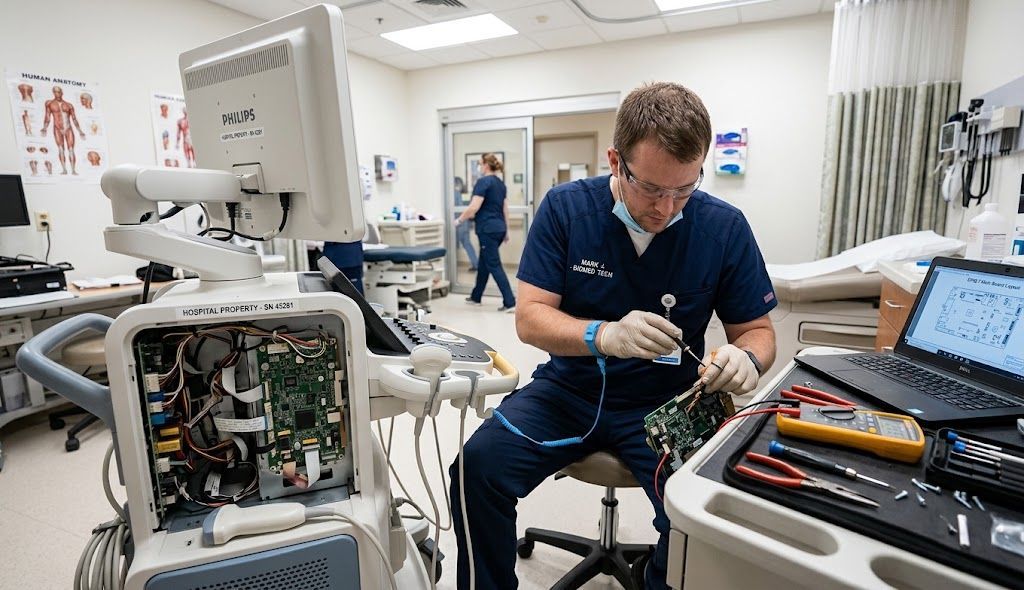
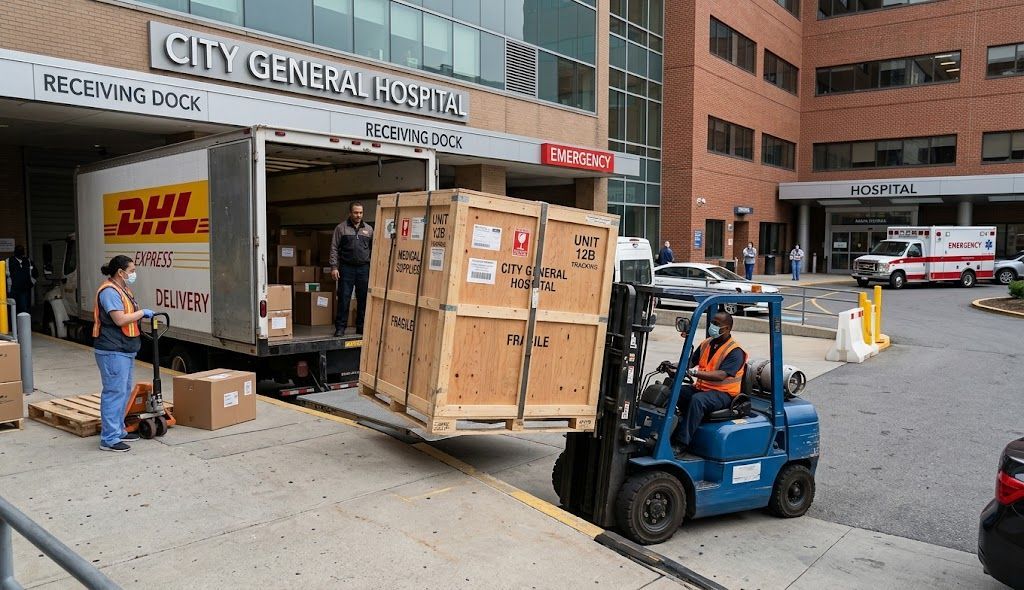
Possible items include freight, receiving, inside delivery, room placement, assembly, system configuration, network connection, DICOM setup, testing, applications training, deinstallation of old equipment, and removal or shipment of a trade-in.
Preferred Medical's existing installation guide demonstrates why this matters: room readiness, network configuration, presets, transducers, workflow testing, training, and post-installation optimization all affect whether a system becomes productive on schedule.
A proposal is stronger when implementation responsibilities are explicit rather than assumed.
10. Read the Warranty Line by Line
"Warranty included" does not tell the buyer enough.
Determine:
- Warranty duration
- Start date
- Parts coverage
- Labor coverage
- Travel coverage
- Transducer coverage
- Software coverage
- Preventive maintenance
- Remote support
- Loaner availability
- Accidental-damage exclusions
- Geographic restrictions
- Response commitments
Do not assume the console and every transducer receive identical coverage.
The cost of a service event can matter, but so can the operational cost of having a clinically essential system or probe unavailable.
11. Compare Service After the Initial Warranty
The buying decision should consider what happens after the easiest ownership period is over.
Ask whether ongoing coverage is available, what it includes, how pricing is established, whether probes can be covered, how remote support works, who provides field service in your geography, and what happens as the platform ages.
Preferred Medical's current service guide makes an important distinction: warranty, service agreements, preventive maintenance, and quality assurance are related but not interchangeable.
AIUM's 2026 accreditation standards state that ultrasound equipment should remain in optimal operating condition and undergo documented QA testing at least annually, or more frequently when problems arise. Buyers should therefore understand both vendor service responsibilities and their organization's separate quality requirements.
12. Review Probe Coverage Separately
A fully functioning console cannot perform a particular examination if the necessary probe is unavailable.
Ask whether each critical transducer is covered for ordinary failure, accidental damage, cable damage, connector problems, or other common issues.
Also ask what happens while a probe is being evaluated or repaired.
Is a loaner available? How quickly? Who pays shipping? Are there coverage limits?
For an OB/GYN or fertility practice that relies heavily on one endocavitary transducer, probe availability can be just as operationally important as console uptime.
13. Standardize the Acquisition Structure
Do not compare a cash-purchase proposal with a financed proposal or lease solely on the first number shown.
Identify whether each quote represents:
- Cash purchase
- Financed purchase
- Lease
- Lease-to-own or other structured agreement
- Demonstration equipment acquisition
- Trade-in transaction
Separate the equipment price from interest, fees, payments, residual or buyout obligations, and any bundled service.
The next Preferred Medical article in this series addresses financing and leasing in greater depth, because acquisition structure deserves its own analysis.
14. Document the Trade-In
If an existing ultrasound system is part of the transaction, the trade-in should have its own clearly defined terms.
Confirm:
- Equipment being traded
- Included transducers and accessories
- Quoted credit
- Condition requirements
- Removal timing
- Deinstallation responsibility
- Shipping responsibility
- Insurance responsibility
- Data-removal responsibilities
- What happens if installation is delayed
- Whether the old machine can remain temporarily as backup
The value of a trade-in is not merely its credit amount. Transition timing can also affect operational continuity.
15. Compare the Five-Year Ownership Picture
The final comparison should move beyond acquisition price.
Estimate the ownership cost associated with each configuration over the organization's expected use period.
Consider equipment, probes, required software, recurring licenses, installation, training, connectivity, service, financing expenses, expected probe replacement, and foreseeable upgrade requirements.
Then compare those costs with clinical capability, workflow, serviceability, expected utilization, and technology runway.
This does not require predicting every expense perfectly.
It requires avoiding a decision based on one highly visible number while ignoring less visible obligations.
Build an Apples-to-Apples Ultrasound Proposal Scorecard
Once the proposals are complete, put them into one comparison document.
Use identical rows for each vendor and configuration. Mark items as included, optional, excluded, unknown, or not applicable.
Whenever an item is "unknown," return to the vendor before scoring the proposal.
A lower price should not receive an automatic advantage when the proposal omits something another vendor has already included.
Likewise, a more expensive configuration should not receive automatic credit for advanced features that the practice has no approved clinical use for.
The goal is appropriate value, not maximum technology or minimum price.
Different Practices Should Weight the Scorecard Differently
A private OB/GYN group may give greater weight to dependable abdominal and transvaginal imaging, measurement workflow, ergonomics, 3D/4D capability, service, and manageable ownership cost.
A fertility clinic may increase the weighting for endovaginal performance, follicular workflow, repeat measurements, procedure-room ergonomics, and throughput.
A maternal-fetal medicine program may give premium image performance, fetal applications, specialized Doppler, advanced transducers, uptime, and applications expertise substantially greater weight.
A multisite organization may prioritize standardization, fleet support, cybersecurity, centralized service, cross-site training, and predictable lifecycle planning.
There is no universal scorecard because there is no universal women's health ultrasound program.
Frequently Asked Questions
What should be included in an OB/GYN ultrasound machine quote?
At minimum, the proposal should identify the exact system, equipment condition, software configuration, transducers, accessories, clinical applications, connectivity, installation, training, warranty, service terms, delivery responsibilities, and total price. Financing and trade-in terms should be separated clearly when applicable.
Should we choose the lowest ultrasound quote?
Not automatically. Determine whether the proposals contain equivalent equipment, probes, software, support, training, integration, and warranty. A lower initial price may reflect a different configuration rather than a better value.
Should sonographers help compare ultrasound systems?
Whenever feasible, representative users should participate because they can evaluate imaging workflow, ergonomics, measurements, presets, transducer handling, and other details that may not be visible in a written specification.
How many ultrasound vendors should a practice compare?
There is no required number. The goal is to compare enough clinically appropriate options to make an informed decision without creating a process so broad that materially different system categories are treated as equivalent.
When should price be negotiated?
Price becomes more meaningful after the organization has defined its required configuration. Negotiating an incomplete configuration can produce an attractive number that changes later when missing probes, software, service, or connectivity are added.
Turn the Quote Into an Ownership Plan
An ultrasound proposal should describe much more than a machine.
It should describe the clinical configuration, implementation path, training plan, support structure, financial obligation, and technology platform the practice will rely on during years of patient care.
Preferred Medical works with OB/GYN practices, maternal-fetal medicine programs, fertility clinics, hospitals, imaging centers, and multisite women's health organizations to evaluate ultrasound systems from a clinical, operational, and financial perspective.
If your U.S.-based organization is comparing ultrasound proposals, request a configuration and quote review with Preferred Medical. The team can help evaluate examination requirements, transducers, software, workflow, training, service, acquisition options, and long-term ownership considerations so you can compare systems on what actually matters to your practice.

Should You Buy, Finance, or Lease an OB/GYN Ultrasound Machine in 2026? A Practice Acquisition Guide
How Many Scans Does It Take to Pay for an OB/GYN Ultrasound Machine? A 2026 ROI and Break-Even Guide