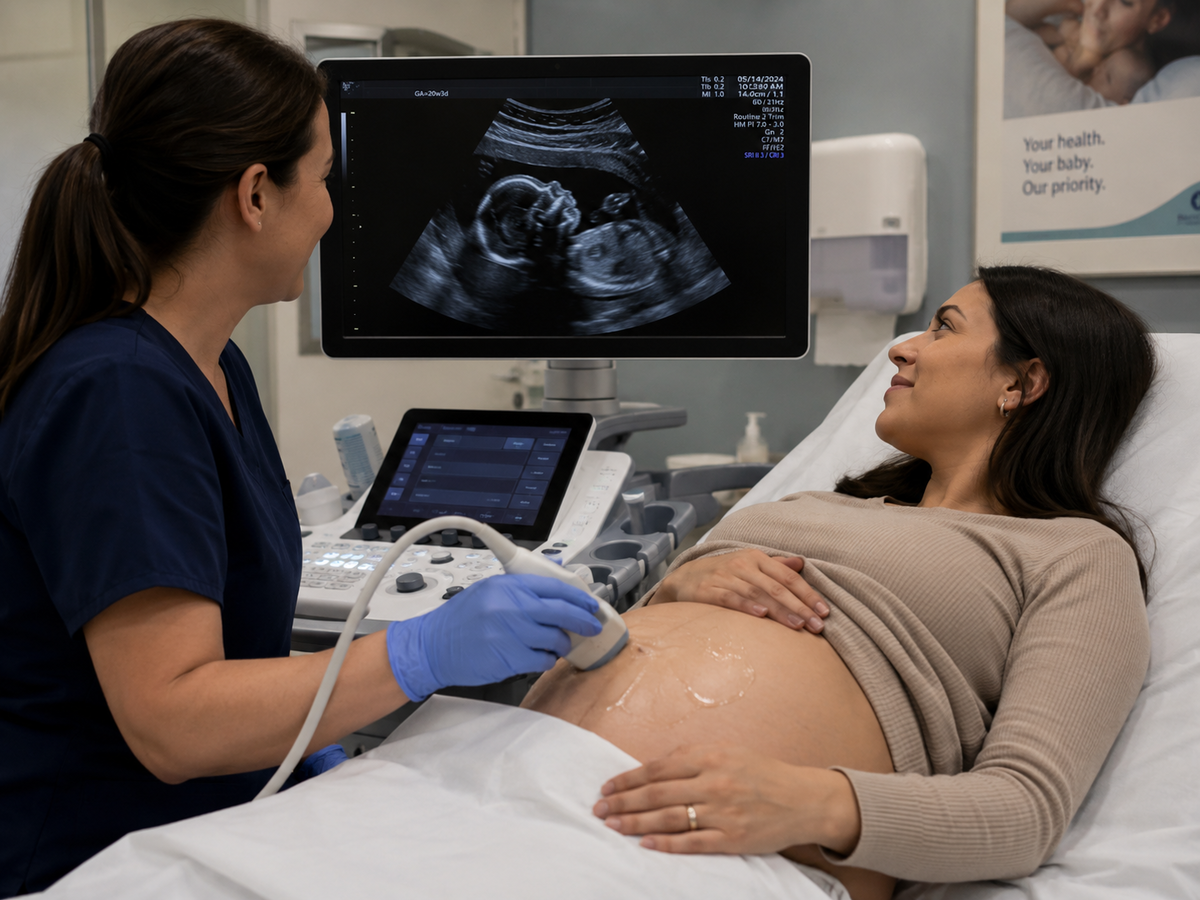

Philips Women’s Health Ultrasound in 2026: EPIQ Elite, Affiniti 70 and the New Elevate Plus Generation
Women’s health ultrasound continues to evolve beyond improvements in image quality alone.
For OB/GYN practices, maternal-fetal medicine programs, hospitals, fertility centers, and women’s imaging departments, the conversation increasingly includes workflow automation, exam consistency, staff efficiency, collaboration, cybersecurity, and the ability to keep ultrasound technology current over a longer ownership cycle.
Philips has been advancing those priorities across its ultrasound portfolio, particularly through the EPIQ Elite and Affiniti platforms.
In 2026, that evolution reached another milestone with U.S. FDA 510(k) clearance of Philips Elevate Plus for EPIQ Elite and Affiniti ultrasound systems.
For women’s health professionals considering a new Philips ultrasound system—or evaluating the future of an existing Philips platform—the important question is not simply what is new.
It is how the latest generation of Philips technology fits the clinical environment.
Philips Ultrasound for Women’s Health in 2026
Philips currently features two primary platforms within its U.S. obstetrics and gynecology ultrasound portfolio: EPIQ Elite and Affiniti 70.
The two systems address different operational and clinical requirements while sharing elements of the broader Philips ultrasound ecosystem.
EPIQ Elite represents Philips' premium ultrasound platform for demanding clinical environments. Affiniti 70 provides advanced imaging and workflow capabilities in a system designed for everyday use in fast-paced departments and practices.
Preferred Medical's broader Philips portfolio also includes Affiniti 50, Affiniti 30, and Compact 5000 Series systems, allowing equipment discussions to extend beyond a single performance or investment level.
For women's health organizations, that means the Philips conversation should begin with the clinical application rather than simply choosing the most advanced available system.
What's New: Philips Elevate Plus
One of the most important recent developments in the Philips ultrasound portfolio is Elevate Plus.
Philips announced FDA 510(k) clearance for Elevate Plus for EPIQ Elite and Affiniti in June 2026. The release builds on Philips' earlier Elevate developments with additional imaging, artificial intelligence, and workflow capabilities.
That distinction is important.
Elevate Plus is not simply the name of a new ultrasound machine. It represents an advancement of the software and intelligence available across established Philips ultrasound platforms.
For organizations evaluating ultrasound technology, this type of software-driven development can be significant because the useful life of an ultrasound investment increasingly depends on more than the physical console.
Software, automation, connectivity, cybersecurity, workflow tools, transducer support, and upgradeability all influence how well a platform can continue serving a department over time.
Why Automation Matters in Women's Health Ultrasound
Ultrasound remains highly operator dependent.
The skill of the sonographer is central to acquiring appropriate images, optimizing the examination, completing measurements, and maintaining an efficient workflow.
Technology does not replace that expertise.
What automation can do is help reduce repetitive steps and make portions of the workflow more consistent.
This has particular relevance in busy women's health environments.
An OB/GYN practice may perform routine obstetric and gynecologic examinations throughout the day. An MFM program may combine detailed fetal anatomy studies, fetal echocardiography and other advanced examinations. Larger imaging departments may have multiple sonographers with different experience levels working across several ultrasound systems.
In each environment, workflow consistency matters.
Philips says Elevate Plus incorporates AI-assisted workflow automation intended to help clinicians acquire reproducible images more efficiently and standardize routine examinations.
For imaging leaders, the potential value is operational as much as technological.
The question becomes: Can the ultrasound platform help experienced clinicians spend less time on repetitive workflow while supporting consistency across the department?
EPIQ Elite: Philips' Premium Platform
For complex women's health imaging environments, EPIQ Elite sits at the high end of the Philips portfolio.
It is particularly relevant when an organization needs a platform capable of supporting sophisticated imaging requirements across multiple clinical applications.
In women's health, that can include demanding OB/GYN imaging, maternal-fetal medicine, fetal assessment and other advanced diagnostic applications depending on system configuration.
EPIQ Elite also gives organizations access to Philips' broader imaging technologies and transducer ecosystem.
That matters for departments whose ultrasound requirements extend beyond one narrow application.
A hospital, for example, may want a premium ultrasound platform that can support advanced women's health imaging while fitting into a larger enterprise imaging strategy.
An MFM group may place greater emphasis on advanced imaging capability, transducer selection, workflow, reproducibility and long-term technology planning.
In those environments, evaluating EPIQ Elite should involve more than reviewing a feature list.
The organization should define the examinations being performed, required transducers, software options, reporting and connectivity needs, expected patient volume, service requirements and future clinical plans.
Affiniti 70: Advanced Performance for Everyday Imaging
Not every women's health organization requires the highest-tier ultrasound platform.
For many OB/GYN practices and outpatient imaging environments, the balance between performance, workflow, footprint and investment can be just as important as maximum technical capability.
That is where Philips Affiniti 70 becomes particularly relevant.
Philips describes Affiniti 70 with Elevate Plus as the most advanced system in the Affiniti family, designed for fast-paced environments with advanced clinical features, intelligent workflow and robust performance.
For a busy OB/GYN practice, that positioning makes sense.
The typical practice needs dependable image quality, appropriate obstetric and gynecologic transducers, efficient measurements, intuitive operation and a workflow that can support a full patient schedule.
The goal is not necessarily to purchase every available capability. It is to configure the system around the exams the practice actually performs. That distinction can have a substantial impact on equipment value.
Think in Terms of Platform Fit, Not Product Hierarchy
One of the easiest mistakes when evaluating ultrasound systems is assuming that the highest-tier system is automatically the right choice.
Women's health programs vary considerably.
- A high-risk MFM center performing complex fetal imaging has different requirements from a general OB/GYN practice performing routine obstetric and pelvic ultrasound.
- A fertility clinic has another workflow.
- A breast imaging program has another.
- And a hospital department operating ultrasound across multiple specialties may prioritize platform flexibility and standardization differently from a private physician practice.
Rather than beginning with:
Which Philips ultrasound machine is best?
A more useful question is:
Which Philips platform and configuration best match the examinations, patient volume, clinicians and growth plans of this organization?
That change in perspective makes equipment selection considerably more practical.
Transducer Strategy Still Matters
Software innovation attracts considerable attention, but transducer selection remains fundamental to ultrasound performance.
Women's health imaging can require different probe technologies for abdominal obstetric imaging, transvaginal examinations, detailed superficial imaging and specialized applications.
The appropriate transducer package therefore needs to be considered at the same time as the console.
This is especially important when comparing equipment proposals.
Two EPIQ Elite or Affiniti 70 quotations can differ substantially based on the probes, software licenses, options, warranty, service, training and connectivity included.
Practices should avoid comparing systems based on console price alone.
A lower-priced proposal that excludes an essential transducer or software package may not actually represent the lower-cost clinical solution.
Workflow Is Becoming Part of the Equipment Decision
The newest generation of ultrasound technology also reflects a broader shift in purchasing priorities.
Historically, equipment comparisons often centered primarily on image quality.
Image quality remains essential, but today's women's health imaging leaders also need to consider how technology affects the entire examination.
That includes:
- Patient setup
- Image acquisition
- Measurements
- Exam protocols
- Reporting
- Data transfer
- System presets
- Training
- Remote support
- Collaboration
- Software management
These factors become increasingly important as patient volumes rise and experienced ultrasound professionals remain valuable resources.
A platform that reduces unnecessary steps or makes common workflows more repeatable may create benefits that cannot be captured by comparing specification sheets alone.
Collaboration and Remote Support
Philips has also continued developing remote capabilities within its ultrasound ecosystem.
Its Collaboration Live capabilities are designed to enable remote interaction around ultrasound examinations and systems, including collaboration and support.
For multi-location women's health organizations, that creates an interesting technology consideration.
A practice group operating several clinics may need to think about how expertise is shared across sites. Hospitals may need support for users with varying levels of experience. Organizations expanding into satellite locations may want technology that fits into a broader support model.
Remote capabilities should not replace appropriate on-site clinical expertise or training.
But they can become another component of a modern ultrasound infrastructure.
Don't Forget Cybersecurity and Connectivity
Ultrasound systems are no longer isolated imaging devices.
They operate within connected clinical environments.
That means cybersecurity, software management, DICOM connectivity, reporting integration and IT requirements should be considered during the purchasing process.
Philips has made cybersecurity and data management part of its recent EPIQ and Affiniti platform development, including remote software capabilities within the Elevate generation.
For a practice administrator or imaging director, this means IT should be involved before installation—not after the ultrasound system arrives.
Understanding network requirements, data flow, reporting integration and security expectations early can make implementation considerably smoother.
EPIQ Elite or Affiniti 70?
There is no universal answer.
For organizations evaluating the two primary Philips women's health platforms, the decision should follow clinical requirements.
EPIQ Elite deserves consideration when advanced imaging performance, sophisticated clinical applications, broad platform capabilities and a premium technology strategy are priorities.
Affiniti 70 deserves consideration when the organization needs advanced imaging and intelligent workflow for a busy everyday clinical environment but may not require the complete premium-platform profile.
And for practices with different clinical or capital requirements, additional Philips platforms may warrant consideration as part of a broader equipment discussion.
The right decision ultimately depends on configuration.
What Women's Health Buyers Should Evaluate in 2026
When comparing Philips ultrasound systems, women's health organizations should define several factors before requesting a final proposal.
- Start with the clinical exam mix.
- Determine which transducers are required.
- Identify which software packages and workflow capabilities are necessary.
- Review DICOM, reporting and network requirements.
- Consider whether the organization expects its clinical services to expand.
- Evaluate warranty and service coverage.
- Determine training requirements.
And understand whether the proposed system and software strategy provide an appropriate technology horizon for the expected ownership period.
Those questions make it easier to distinguish a compelling technology demonstration from a sound long-term equipment decision.
The Bigger Philips Story Is the Platform
The most significant development in Philips women's health ultrasound is not simply one new feature.
It is the continued evolution of ultrasound toward a software-enabled imaging platform.
EPIQ Elite and Affiniti 70 remain distinct systems for different clinical and operational environments, but developments such as Elevate Plus illustrate how image quality, AI-assisted workflow, automation, collaboration and system management are increasingly interconnected.
For women's health professionals, that changes how ultrasound equipment should be evaluated.
The decision is no longer only about what a machine can image on installation day.
It is also about how effectively the platform can support clinicians, workflows and changing requirements throughout its useful life.
Evaluating Philips Women's Health Ultrasound With Preferred Medical
Preferred Medical works with OB/GYN practices, maternal-fetal medicine programs, fertility clinics, hospitals, imaging centers and women's health organizations evaluating Philips ultrasound technology.
The process begins by defining clinical requirements and then matching those requirements to the appropriate platform, transducers, software, workflow, service, training and acquisition strategy.
For organizations considering EPIQ Elite, Affiniti 70 or another Philips ultrasound configuration, that consultative approach can help turn a long list of technology options into a practical equipment plan.
Considering a Philips ultrasound system for your women's health program?
Talk with Preferred Medical about your exam mix, clinical applications, patient volume, transducer requirements, workflow, budget and growth plans. We can help your team compare Philips configurations and build an ultrasound solution around the way your organization actually delivers women's healthcare.
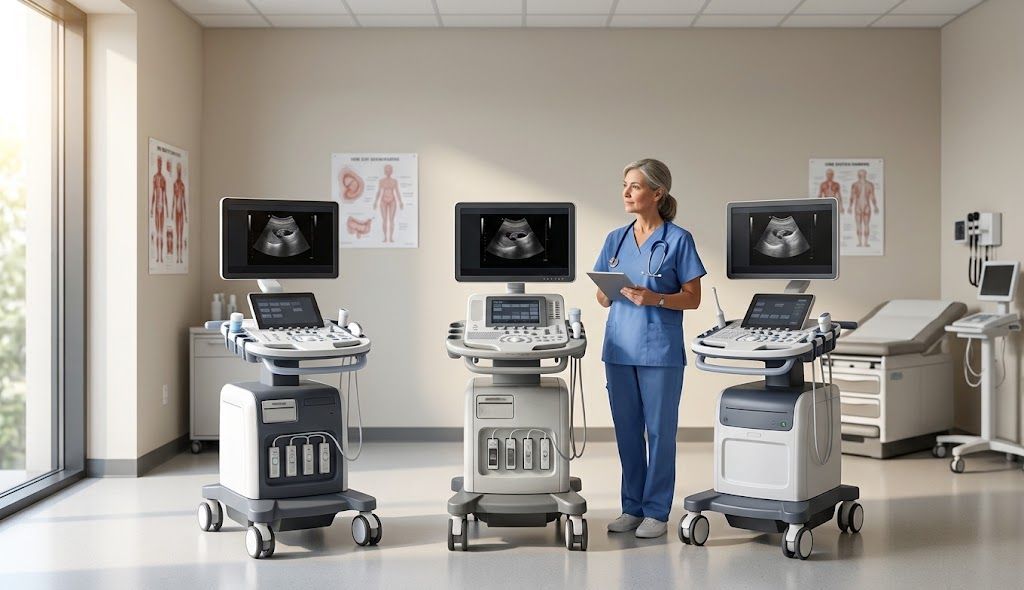

Should You Buy, Finance, or Lease an OB/GYN Ultrasound Machine in 2026? A Practice Acquisition Guide

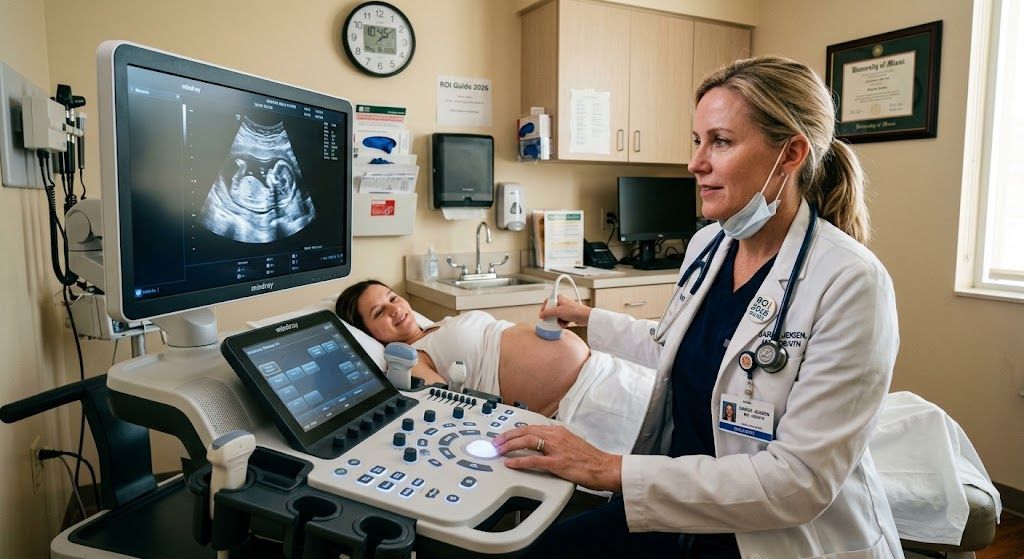
How Many Scans Does It Take to Pay for an OB/GYN Ultrasound Machine? A 2026 ROI and Break-Even Guide