
When to Replace an OB/GYN Ultrasound Machine in 2026: 9 Signs It’s Time to Upgrade
For an OB/GYN practice, maternal-fetal medicine program, fertility clinic, women’s imaging center, or hospital department, an ultrasound system is more than a piece of imaging equipment. It is part of the daily clinical workflow, appointment schedule, documentation process, sonographer experience, and long-term service strategy.
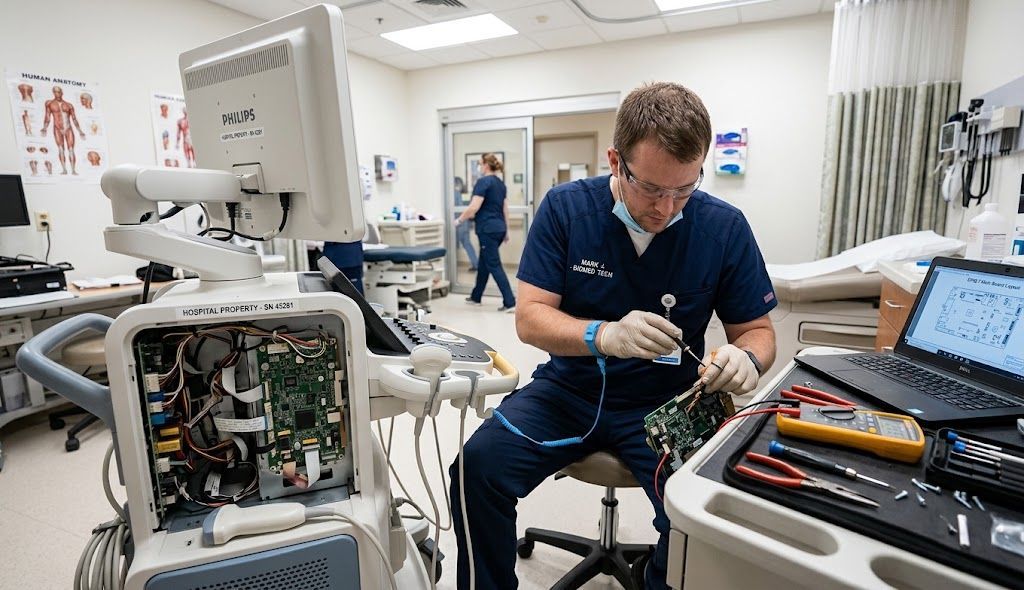
Yet many organizations approach ultrasound replacement in one of two ways. They either continue operating the existing machine until a major failure forces an urgent decision, or they assume the system must be replaced simply because it has reached a certain age.
Neither approach provides a complete picture.
The age of an ultrasound machine matters, but it should not be the only factor used to determine when replacement is necessary. A well-maintained system may continue to support an organization effectively when it delivers the required image performance, remains serviceable, integrates with current technology, and fits the clinical team’s workflow. A newer system, by contrast, may become limiting sooner when examination volume, clinical services, software requirements, or operational priorities change.
The American Institute of Ultrasound in Medicine’s current accreditation standards state that accredited practices must keep ultrasound equipment in optimal operating condition and perform documented quality-assurance testing at least annually—or more frequently when issues arise. Those service and quality records give organizations a more objective starting point for replacement planning than an arbitrary age alone.
Kirk McGuire, President, Preferred Medical, shared his opinion, “The right time to replace an ultrasound system is not determined by the calendar alone. It is determined by whether the equipment still supports the clinical work, the sonographer’s workflow, the practice’s technology environment, and the organization’s plans for growth."
How Long Does an OB/GYN Ultrasound Machine Last?
There is no universal expiration date for an ultrasound system.
A specific number of years may be useful for budgeting and capital-planning purposes, but it should not be treated as a mandatory clinical replacement schedule. Equipment utilization, preventive service, probe condition, software support, environmental conditions, examination complexity, and the availability of replacement parts can all affect how long a system remains appropriate.
Instead of asking only, “How old is our ultrasound machine?” practices should ask five broader questions:
- Does it still provide the image performance required for our examinations?
- Is it dependable enough for our patient volume and schedule?
- Are parts, transducers, software, and qualified service still available?
- Does it work with our reporting, storage, network, and security environment?
- Is keeping it operational still clinically and financially reasonable?
A system does not necessarily need replacement because it is older. Replacement becomes more appropriate when the equipment begins falling short in several of these areas—or when one limitation creates an unacceptable clinical, operational, or support risk.
1. Image Performance No Longer Supports the Examination Mix
One of the most important replacement signals is a growing gap between the examinations the organization needs to perform and the imaging capabilities the system can consistently provide.
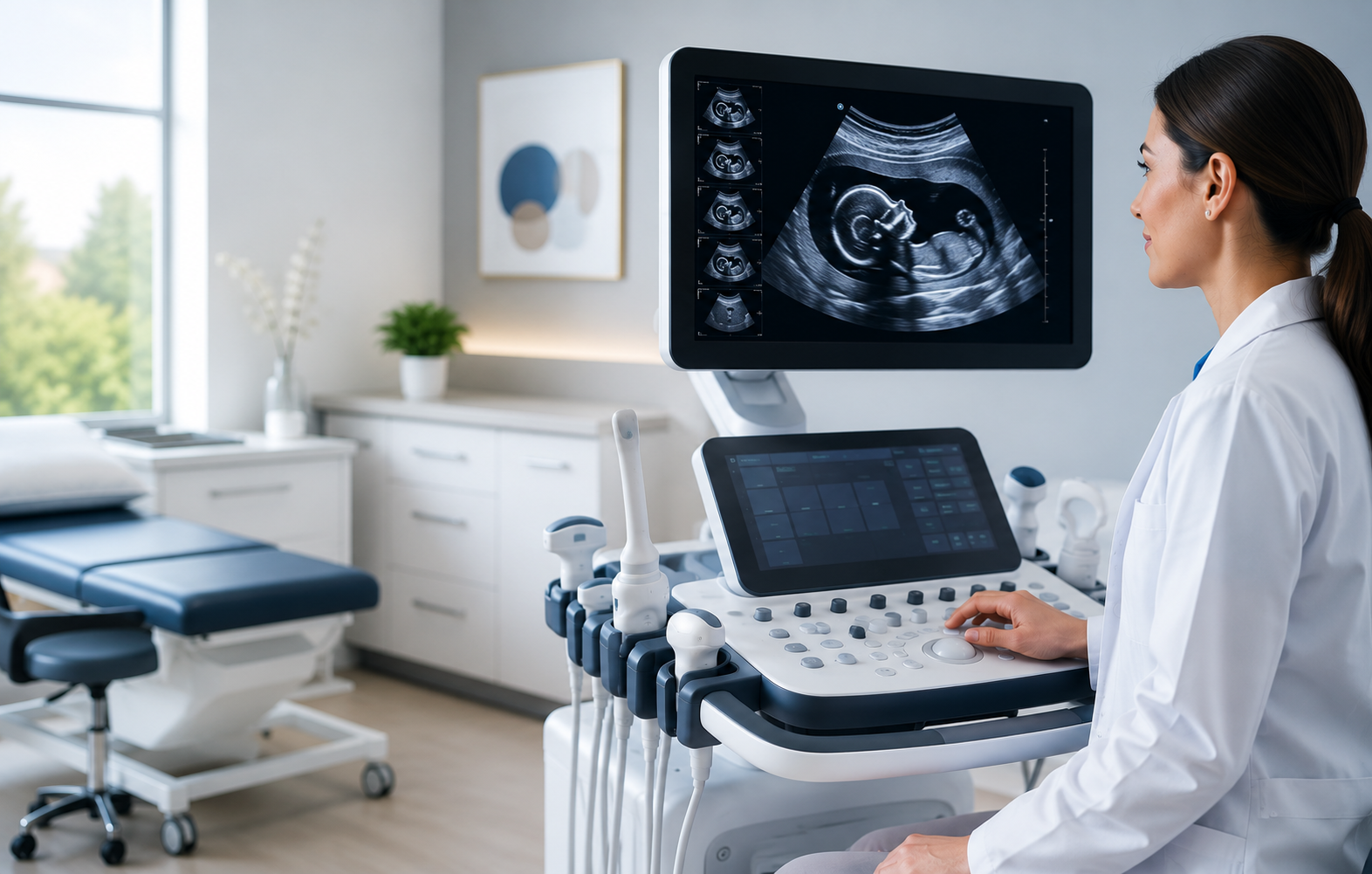
A general OB/GYN practice may need dependable abdominal and transvaginal imaging, fetal biometry, pelvic imaging, Doppler, and efficient documentation. A maternal-fetal medicine program may require more advanced fetal cardiac imaging, high-resolution volume acquisition, specialized Doppler applications, and support for complex examinations. Fertility clinics may prioritize detailed endovaginal imaging, follicular assessment, repeatable measurements, and procedure-room workflow.
Possible warning signs include:
- Users routinely spend excessive time trying to optimize difficult studies.
- The system cannot support required transducers or clinical software.
- Physicians or sonographers report that certain examinations are increasingly difficult to complete efficiently.
- Studies are being referred elsewhere because the current platform lacks necessary capabilities.
- The practice is seeing a more technically challenging patient population than the system was originally selected to support.
- Image consistency varies significantly among rooms or locations using different generations of equipment.
Before deciding that the console itself needs replacement, rule out correctable causes. A damaged or deteriorating transducer, poor presets, inadequate maintenance, room-design limitations, or gaps in applications training can sometimes resemble a system-performance problem.
The objective is not to replace equipment simply because a newer platform produces more visually impressive images. The question is whether the existing system continues to support the organization’s defined examinations, protocols, quality expectations, and users.
2. Downtime and Service Calls Are Increasing
An isolated repair does not automatically justify replacing an ultrasound machine. Recurring failures are different.
Practices should review service records over a meaningful period rather than relying on general impressions.
Useful information includes:
- Number and type of service calls
- Total hours or days the system was unavailable
- Whether the same failure has occurred more than once
- Repair expenses outside the service agreement
- Probe failures and replacement history
- Time required to obtain parts
- Frequency of remote and on-site troubleshooting
- Use of loaner systems
- Examinations rescheduled, redirected, or outsourced
A dependable service relationship can extend the useful life of ultrasound equipment. Preferred Medical describes its current field-service capabilities as including remote diagnostics, scheduled maintenance, flexible service plans, and on-site support, although exact coverage depends on the system, manufacturer, geography, and agreement.
The concern is not simply that the system has required service. All medical equipment requires maintenance. The more important question is whether service events are becoming frequent, unpredictable, or disruptive enough to affect patient scheduling and staff confidence.
When the practice can no longer plan around the machine’s reliability, replacement deserves serious consideration.
3. Parts, Transducers, or Software Support Are Becoming Limited
A system may continue operating after the manufacturer reduces or ends formal support, but the organization’s risk can increase as components become more difficult to source.
Practices should determine:
- Whether the manufacturer still supports the platform
- How long critical parts are expected to remain available
- Whether compatible replacement transducers can still be obtained
- Whether current software versions can be installed
- Whether license keys and application packages remain available
- Whether qualified service engineers have experience with the platform
- Whether third-party parts or repairs are appropriate under organizational policies
- Whether service agreements can still be renewed at a predictable cost
The end of original manufacturer support does not automatically mean that equipment must be removed from use. It does mean that the practice should understand who will maintain the system, where replacement components will come from, and how long repairs may take.
Limited transducer availability deserves particular attention. Even when the console remains operational, the loss of a required endocavitary, curved-array, volume, or high-frequency linear transducer may prevent the practice from performing part of its examination mix.
When supportability depends on increasingly scarce parts, uncertain repair timelines, or software that can no longer be updated, the organization should begin planning before a failure creates an emergency purchase.
4. Connectivity and Cybersecurity Requirements Have Outgrown the System
Ultrasound systems increasingly operate as connected medical devices rather than isolated machines. They may communicate with electronic health records, PACS, reporting applications, modality worklists, remote-support platforms, and other clinical systems.
The FDA notes that greater medical-device connectivity can improve healthcare functionality while also increasing potential cybersecurity risk. It describes manufacturers and healthcare delivery organizations as sharing responsibility for identifying risks and applying appropriate safeguards throughout the device lifecycle.
An older ultrasound platform may become difficult to support when it cannot meet current requirements for:
- DICOM communication
- Modality worklist
- Secure image transfer
- User authentication
- Network segmentation
- Operating-system support
- Manufacturer-issued software updates
- Remote service access
- Data export
- PACS or electronic health record integration
- Organizational cybersecurity policies
Not every connectivity limitation requires replacement. Information technology and healthcare technology management teams may be able to use network controls, approved interfaces, or other mitigations.
Replacement becomes a stronger option when the system cannot be updated, cannot connect reliably to required applications, or requires increasingly complex workarounds that affect security, documentation, or workflow.
The equipment-selection process should include information technology, clinical leadership, administration, biomedical or healthcare technology management personnel, and any outside integration partners. Cybersecurity should not be evaluated only after a new machine arrives.
5. The System Is Creating Daily Workflow Bottlenecks
An ultrasound machine can remain technically operational while becoming operationally inefficient.
Small delays repeated across every examination can affect room utilization, documentation, appointment flow, and the amount of time clinicians and sonographers spend completing routine tasks.
Common bottlenecks include:
- Slow system startup
- Repeated manual patient-data entry
- Cumbersome measurements
- Limited customization of examination presets
- Excessive steps for common calculations
- Slow image or clip transfer
- Limited transducer ports
- Frequent probe changes
- Difficulty accessing prior studies
- Inconsistent reporting or archiving
- Limited storage capacity
- Unreliable worklist communication
The goal is not to purchase automation simply because it is available. A new feature creates value only when it addresses a frequent task and fits the organization’s actual protocols.
Before replacing a system, determine whether training, preset optimization, reporting configuration, or workflow redesign could correct the problem. When the core platform cannot support meaningful improvements, however, continued workarounds can become more expensive and disruptive than an organized upgrade.
Practices evaluating a replacement can use Preferred Medical’s related buyer’s guide to examine image performance, transducers, workflow, demonstrations, service, training, and future growth without repeating that full selection process here.
6. The Equipment Cannot Be Positioned Ergonomically for the Team
Ultrasound requires repeated positioning of the hand, wrist, shoulder, neck, and torso. Equipment adjustability, room design, examination tables, chairs, workload, patient positioning, and scanning technique can all influence the physical demands placed on sonographers.
The Society of Diagnostic Medical Sonography identifies work-related musculoskeletal disorders as a major occupational concern and provides resources addressing workstation design, positioning, reach, posture, and equipment adjustability.
An equipment replacement may be appropriate when the existing system cannot be positioned effectively for different users or examination environments.
Warning signs can include:
- A control panel with insufficient height or lateral adjustment
- A monitor that cannot be positioned comfortably
- Frequently used controls that require extended reaching
- Poor cable or transducer management
- A cart that is difficult to move between rooms
- Incompatibility with the examination table or chair
- A room footprint that forces awkward positioning
- Complaints that continue despite training and workstation changes
Equipment alone cannot solve every ergonomic problem. A comprehensive assessment should also consider room layout, staffing, schedules, patient positioning, examination tables, seating, accessories, and scanning practices.
However, when the system itself prevents users from maintaining more neutral positions, ergonomics becomes a legitimate replacement criterion—not simply a matter of comfort or preference.
7. New Clinical Services Require Capabilities the Current System Cannot Add
A system selected for routine obstetric and gynecologic imaging may become limiting when an organization expands into new services.
Examples include:
- Maternal-fetal medicine
- Advanced fetal cardiac imaging
- Fertility and reproductive medicine
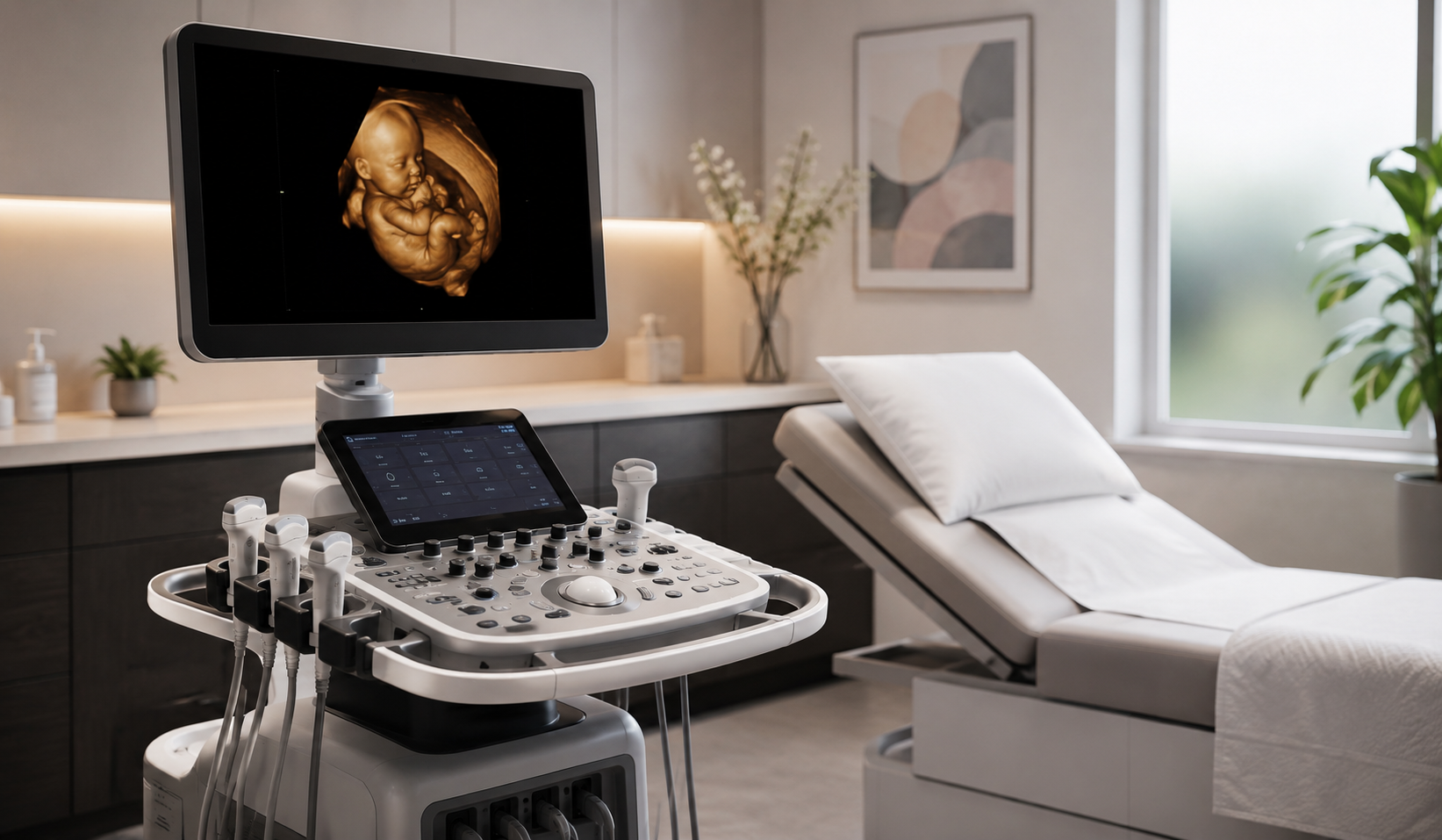
- Advanced 3D/4D applications
- Pelvic-floor imaging
- Breast ultrasound
- Elastography
- Procedure guidance
- Vascular or general imaging
- Multispecialty shared-service imaging
Some platforms can expand through additional software packages, transducers, or hardware upgrades. Others have a defined ceiling.
Before replacing the machine, ask whether the required capability can be added to the existing platform and obtain a complete proposal that includes software, probes, installation, training, warranty implications, and expected support life.
An upgrade may be appropriate when the existing system remains clinically strong and the added application has a clear path forward. Replacement may be more reasonable when the upgrade is expensive, incomplete, difficult to support, or still leaves the organization operating near the platform’s limits.
Practices should avoid forcing a new service line onto equipment that was not designed or configured to support it. The replacement should be based on the approved clinical strategy—not on the longest available feature list.
8. Multisite Standardization Has Become Difficult
For a single-site practice, one well-supported older machine may remain manageable. For a growing organization with several rooms or locations, an inconsistent equipment fleet can create broader operational challenges.
Different platforms may use different:
- Control layouts
- Examination presets
- Measurement packages
- Reporting workflows
- Transducers and accessories
- Software revisions
- Service agreements
- User-management processes
- Integration methods
- Training requirements
This does not mean every site must have the same premium system. A practical fleet strategy may include different configurations based on examination mix and volume while maintaining a reasonable degree of consistency.
Replacement may be justified when standardization would reduce training complexity, simplify support, create more consistent protocols, improve staff mobility among sites, or provide a clearer long-term service plan.
In this situation, an individual machine may be replaced even though it still operates. The decision is driven by the needs of the organization as a whole rather than the condition of one console.
9. The Cost of Keeping the System Is Becoming Harder to Justify
The purchase price of a new ultrasound machine is only one side of the financial decision. The other is the total cost of continuing to operate the existing equipment.
Practices should consider both direct and indirect costs.
Direct costs may include:
- Service agreements
- Uncovered repair expenses
- Preventive maintenance
- Replacement transducers
- Software support
- Integration work
- Replacement accessories
- Temporary or rental equipment
Indirect costs may include:
- Rescheduled appointments
- Referred or outsourced examinations
- Staff time spent troubleshooting
- Unplanned downtime
- Inconsistent workflows
- Delayed expansion into new services
- Additional support required for an aging platform
The objective is not to justify new equipment by assigning unrealistic value to every inconvenience. It is to compare the two paths using consistent assumptions.
An older system may still be the better financial choice when it is dependable, supportable, clinically appropriate, and inexpensive to maintain. Replacement becomes more compelling when costs are increasing while reliability, functionality, and supportability are declining.
For detailed acquisition ranges, configuration variables, financing considerations, and total cost of ownership, readers can continue to OB/GYN Ultrasound Machine Cost in 2026: Pricing, Features, and Total Cost of Ownership.
Repair, Upgrade, or Replace? A Practical Decision Framework
No single warning sign automatically means that a system must be replaced. The decision usually falls into one of three paths.
| Path Options | It may be appropriate when |
|---|---|
| Repair | The problem is isolated, parts and qualified service remain available, the system still meets clinical requirements, software remains supported, and the repair can restore dependable operation. |
| Upgrade | The console remains clinically and mechanically appropriate, and a supported software package, transducer, hardware component, or connectivity update can add the required capability. |
| Replace | Failures are recurring, parts or probes are difficult to obtain, software support is limited, the system cannot support required examinations or integrations, or several operational limitations are occurring together. |
The organization should also distinguish between a malfunction and a strategic limitation. A failed component may be repairable. A platform that can no longer support the practice’s clinical, technical, or growth requirements presents a broader problem.
When equipment fails required quality-assurance testing or is suspected of being unsafe or clinically unreliable, it should be handled according to organizational policies and evaluated by appropriately qualified personnel before further clinical use. AIUM accreditation guidance emphasizes maintaining equipment in optimal condition and performing quality-assurance testing more frequently when problems arise.
How to Plan an Ultrasound Replacement Without Disrupting Operations
The best time to plan a replacement is before the current machine becomes an urgent operational problem.
Document the Existing Equipment
Record the manufacturer, model, serial number, manufacturing year, software revision, installed applications, transducers, accessories, service agreement, repair history, and known limitations.
For multiple locations, create a complete fleet inventory rather than assessing one system at a time.
Gather Input From the People Who Use and Support It
Include physicians, sonographers, administrators, information technology personnel, biomedical or healthcare technology management staff, and operational leaders.
Ask each group to identify what is working, what is causing difficulty, and what the next system must support.
Define Current and Future Clinical Requirements
Separate requirements into three categories:
- Needed at installation
- Likely to be needed during the planned ownership period
- Optional capabilities without an approved operational use
This helps the organization avoid buying too little technology—or paying for applications that are unlikely to be used.
Review Service, Quality, and Downtime Records
Use documented information whenever possible. Look for trends in service frequency, repair cost, probe failures, software issues, and system availability.
A replacement decision becomes easier to defend when it is based on records rather than general dissatisfaction.
Complete the Technical Assessment Early
Confirm reporting, storage, worklist, user-authentication, network, cybersecurity, remote-support, and data-retention requirements before finalizing the configuration.
This reduces the risk of discovering after purchase that additional interfaces, software, or third-party services are required.
Compare Acquisition Paths
Depending on the organization’s priorities, the replacement may be:
- New
- Demonstration equipment
- Professionally refurbished or pre-owned
- Purchased outright
- Financed
- Leased
- Acquired with trade-in credit
The appropriate path depends on the clinical application, expected utilization, required support period, available budget, warranty expectations, and desired installation schedule.
Conduct a Structured Clinical Demonstration
Use realistic examinations, representative users, and a consistent evaluation scorecard. A demonstration should test the proposed configuration—not a substantially different system loaded with applications that are not included in the quote.
Coordinate Installation, Training, and Transition
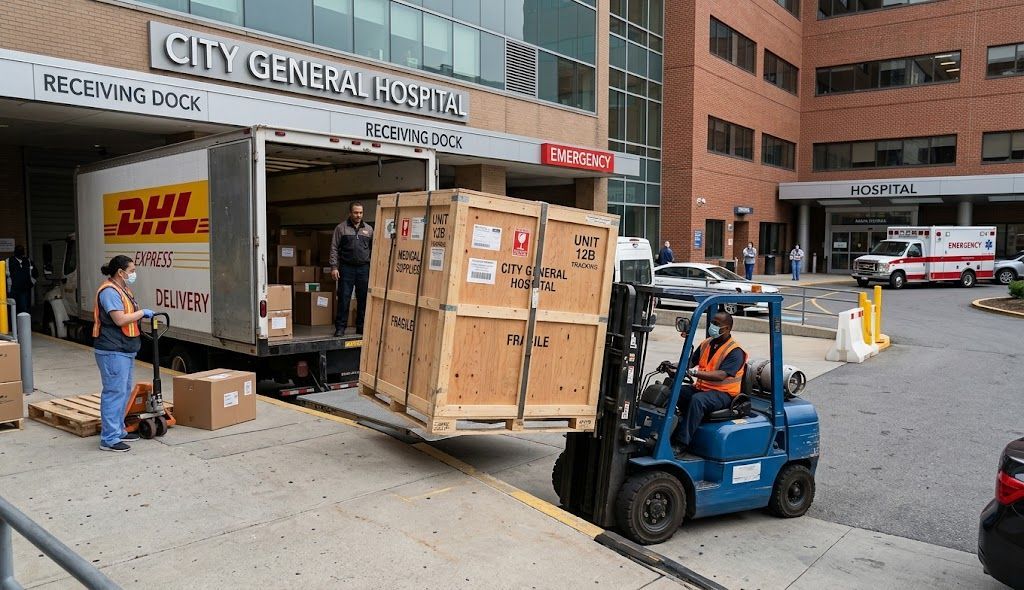
Confirm room readiness, electrical and network requirements, delivery access, deinstallation, data handling, system configuration, applications training, and the go-live schedule.
Keep the existing machine available until the replacement has been installed, connected, tested, and accepted whenever operationally possible.
“A successful upgrade is more than exchanging one machine for another. It means planning the configuration, service, integration, and training together so the clinical team can move forward with confidence from the first day of use," said McQuire.
Questions to Ask About Trade-In and Replacement Options
A trade-in may reduce the net investment and simplify removal of the existing equipment, but the terms should be clearly documented.
Ask:
- What information is required to estimate the trade-in value?
- Does the offer include the console, transducers, printer, cart accessories, and peripherals?
- How does probe condition affect the valuation?
- Who is responsible for deinstallation, packing, shipping, and insurance?
- When will the old system be removed?
- Can removal occur after the replacement has been installed and tested?
- Who is responsible for removing or securing stored patient information?
- Can the trade-in credit be combined with financing or leasing?
- What happens if the condition differs from the original description?
- Is temporary or backup equipment available if the transition schedule changes?
Preferred Medical states that trade-in credit may be available when practices upgrade older ultrasound equipment. Its current offerings also include new and pre-owned systems, installation training, ongoing field service, financing and leasing options, and assistance with equipment upgrades.
Availability and exact terms should be confirmed for the individual transaction.
Frequently Asked Questions
How often should an OB/GYN ultrasound machine be replaced?
There is no fixed replacement interval appropriate for every organization. Replacement timing should reflect image performance, reliability, service history, parts and probe availability, software support, connectivity, cybersecurity, ergonomics, examination mix, and total ownership cost.
Age should prompt evaluation—not automatically determine the outcome.
Is it better to repair or replace an older ultrasound machine?
Repair may be appropriate when the problem is isolated, the platform continues to meet clinical requirements, and parts and qualified service remain readily available.
Replacement may be more appropriate when failures are recurring, repairs are unpredictable, critical components are difficult to obtain, or the system cannot meet current clinical or technical requirements.
Can an older ultrasound machine receive a software upgrade?
Possibly. Upgrade availability depends on the manufacturer, model, hardware revision, current software level, licensing, and support status.
Before purchasing an upgrade, confirm exactly what it adds, whether additional hardware or transducers are required, how long the updated configuration will remain supported, and whether training is included.
Should a replacement ultrasound machine be new or refurbished?
Either can be appropriate.
A new system may offer current hardware and software, a longer support horizon, and clearer future-upgrade options. A professionally refurbished system may provide access to proven capabilities at a lower acquisition cost.
For pre-owned equipment, confirm system history, testing, software revision, probe condition, parts availability, warranty, applications training, service coverage, and the qualifications of the seller or refurbishing organization.
How far in advance should a practice plan an ultrasound replacement?
Planning should begin before reliability or support limitations create an urgent purchase.
The required timeline varies according to system availability, configuration, financing, room preparation, network integration, data-management requirements, demonstration scheduling, training, and removal of the existing equipment.
A planned transition gives the organization more time to compare alternatives and reduces the pressure to accept an incomplete configuration.
What information is needed for an ultrasound trade-in estimate?
Be prepared to provide the manufacturer, model, serial number, approximate manufacturing year, software revision, installed options, transducer list, service history, current operating condition, cosmetic condition, accessories, and photographs.
Accurate information helps the equipment partner prepare a more realistic preliminary valuation.
Plan Your Next Ultrasound Upgrade With Preferred Medical
An aging ultrasound system does not always need immediate replacement. It does require an informed evaluation when downtime increases, support becomes uncertain, workflow slows, or the organization’s clinical and technical requirements change.
Preferred Medical works with OB/GYN practices, maternal-fetal medicine programs, fertility clinics, women’s imaging centers, hospitals, and multisite healthcare organizations to evaluate ultrasound equipment based on clinical fit, workflow, configuration, serviceability, training, technology requirements, and long-term value.
Preferred Medical’s current portfolio includes Philips, Mindray, and Alpinion ultrasound systems, along with new, demonstration, and pre-owned equipment options, applications training, field service, probe support, financing, trade-in discussions, and consultative equipment planning.
Whether the right next step is repairing the current machine, adding a supported upgrade, or replacing the platform, the decision should begin with the way the organization operates today and what it expects its imaging program to support next.
Planning to evaluate or replace an OB/GYN ultrasound system in 2026? Request a personalized ultrasound lifecycle and upgrade assessment based on your current equipment, examination mix, service history, transducer needs, workflow, growth plans, and desired installation timeline.
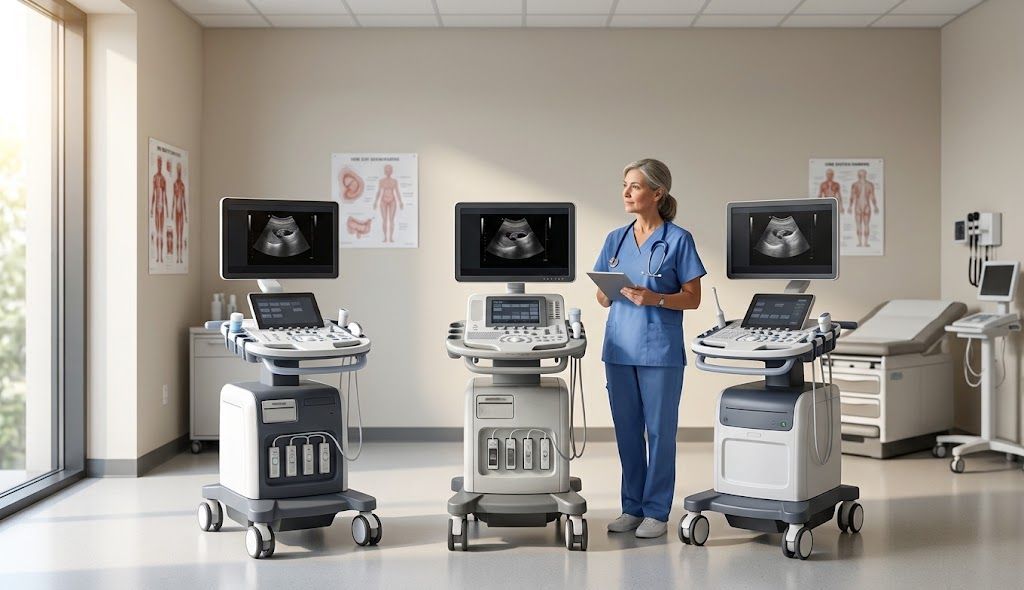

Should You Buy, Finance, or Lease an OB/GYN Ultrasound Machine in 2026? A Practice Acquisition Guide

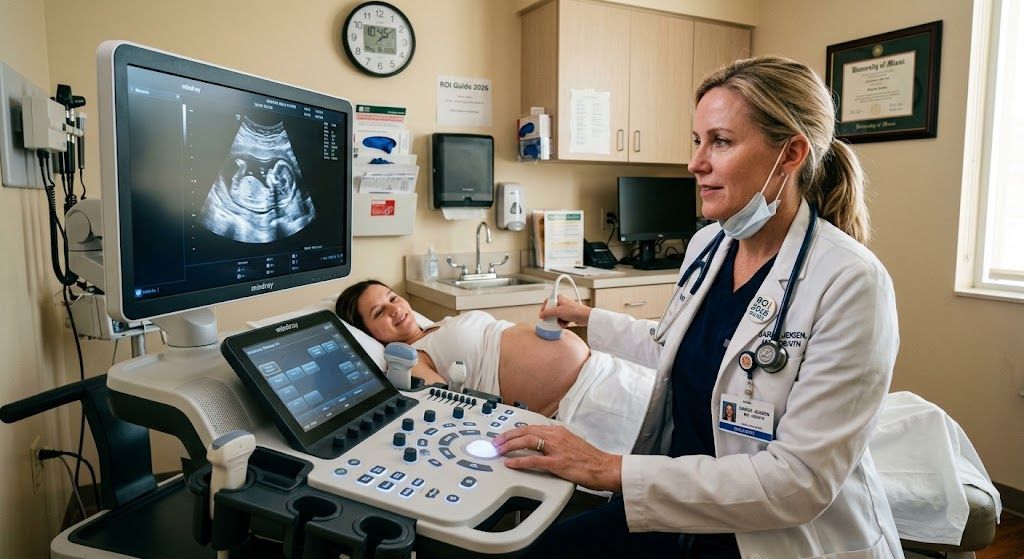
How Many Scans Does It Take to Pay for an OB/GYN Ultrasound Machine? A 2026 ROI and Break-Even Guide