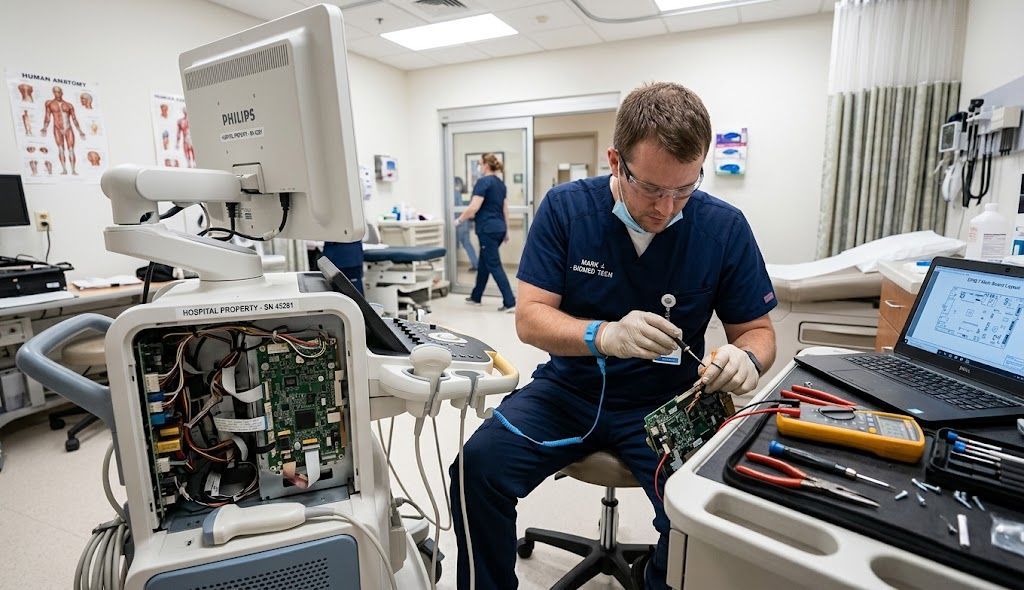

Ultrasound for Fertility Clinics in 2026: How to Choose the Right System for IVF, Follicle Monitoring, and Reproductive Medicine
Ultrasound plays a central role in modern fertility care.
For reproductive endocrinologists, fertility clinics, and in vitro fertilization (IVF) programs, ultrasound technology supports some of the most important decisions made throughout a patient's treatment journey.
From evaluating ovarian anatomy and monitoring follicular development to assessing the endometrium and guiding certain reproductive procedures, ultrasound provides essential information that clinicians use to plan and manage treatment.
But not every ultrasound system is equally suited to the demands of a fertility practice.
A machine designed primarily for routine obstetric examinations may offer excellent fetal imaging capabilities without necessarily providing the most efficient workflow for repeated follicle measurements.
Similarly, a premium ultrasound platform with extensive advanced imaging features may represent more technology than a smaller fertility practice actually needs.
For fertility organizations evaluating ultrasound equipment in 2026, the goal should not simply be to purchase the most advanced machine available.
It should be to identify the system that best supports the clinic's clinical requirements, patient volume, examination workflow, and long-term growth strategy.
Why Fertility Clinics Have Different Ultrasound Requirements
Fertility medicine creates a distinctive imaging environment.
Unlike many diagnostic imaging departments, reproductive medicine programs frequently perform repeated examinations on the same patients throughout a treatment cycle.
A patient undergoing ovarian stimulation may require multiple ultrasound examinations to assess follicular development and endometrial characteristics.
These examinations must be performed consistently, documented accurately, and made available to the treating clinical team.
In addition, fertility programs may perform several different types of ultrasound examinations, including:
- Baseline pelvic and ovarian assessments
- Antral follicle counting
- Serial follicular monitoring
- Endometrial thickness assessment
- Evaluation of uterine and adnexal anatomy
- Selected ultrasound-guided reproductive procedures
- Early pregnancy assessment following treatment
Each application places different demands on ultrasound equipment.
A clinic performing primarily ovulation induction and follicular monitoring may have different technology priorities than a full-service IVF center with procedure rooms and a high daily patient volume.
The first step in choosing an ultrasound machine is therefore understanding the specific examinations the organization performs.
1. Transvaginal Imaging Should Be a Primary Consideration
For most fertility clinics, the transvaginal ultrasound transducer is among the most important components of the equipment configuration.
Transvaginal imaging allows clinicians to visualize the ovaries, developing follicles, endometrium, and other pelvic structures.
The American Society for Reproductive Medicine's 2026 guidance identifies transvaginal ultrasonography as a useful tool for evaluating ovarian reserve, follicular development, and uterine or adnexal pathology.
For an equipment buyer, this creates several practical considerations.
Image quality
The transducer should provide the resolution and penetration required for the clinic's examinations across a range of patient anatomies.
Measurement consistency
Clinicians should be able to identify structures, position measurement calipers, and document findings efficiently.
Ergonomics
Probe size, grip, cable management, and handling characteristics can influence the sonographer's experience during repeated examinations.
Cleaning and reprocessing
Endocavitary transducers require appropriate infection-prevention procedures. Cleaning and high-level disinfection must follow applicable guidance and manufacturer instructions, even when a probe cover is used.
A fertility clinic should also consider whether a transabdominal transducer is needed for examinations in which a transvaginal approach is insufficient or inappropriate.
The important purchasing principle is straightforward:
Evaluate the ultrasound system and its transducers as one complete clinical solution.
An impressive console cannot compensate for a transducer package that does not meet the practice's requirements.
2. Follicle Monitoring Technology Deserves Special Attention
Follicular monitoring is one of the most repetitive imaging activities in fertility medicine.
During appropriate treatment cycles, clinicians evaluate follicular development to help guide decisions about treatment progression.
Depending on the examination and clinical protocol, this may involve identifying multiple follicles, obtaining measurements, documenting their location, and comparing findings across visits.
For clinics managing significant monitoring volume, these repeated activities create an opportunity to improve workflow.
Modern ultrasound systems increasingly incorporate automated measurement functions intended to assist clinicians with these tasks.
For example, Alpinion offers X+ Auto Follicle technology within supported configurations of its X-CUBE ultrasound portfolio.
The technology is designed to assist with identifying and measuring multiple follicles.
That may be particularly useful for fertility programs where repeated manual measurement represents a meaningful part of the examination.
However, automated follicle measurement should not be evaluated solely by whether the feature appears on a manufacturer's specification sheet.
A more useful evaluation considers the entire workflow.
Can the sonographer obtain appropriate images efficiently?
Does the software identify the relevant structures reliably during representative examinations?
Can measurements be reviewed, adjusted, and confirmed?
Are the results easy to document and compare with previous examinations?
Does the technology actually reduce repetitive manual steps?
These questions are important because automation should support qualified clinical users rather than replace their judgment.
An automated feature that requires extensive correction may provide less operational value than expected.
For fertility clinics, the strongest workflow technology is the technology that improves the work clinicians perform every day.
3. Evaluate Endometrial Imaging and Measurement Capabilities
While follicular assessment receives considerable attention, endometrial evaluation is another important component of reproductive medicine.
Depending on the clinical indication and treatment protocol, ultrasound may be used to assess endometrial thickness and characteristics throughout a treatment cycle.
That requires appropriate visualization, reliable measurement tools, and consistent documentation.
When evaluating an ultrasound system, fertility teams should consider:
- Clarity of endometrial visualization
- Ease of obtaining and recording measurements
- Image optimization controls
- Consistency between different clinical users
- Access to relevant prior examinations
- Reporting and image-storage capabilities
The American Institute of Ultrasound in Medicine (AIUM) recognizes serial ultrasound examinations for follicle size and endometrial thickness as examples of focused reproductive endocrinology and infertility imaging.
Its April 2026 statement also emphasizes appropriate documentation, clinical judgment, and the distinction between focused monitoring and comprehensive pelvic examinations.
For equipment planning, that distinction matters.
A system should support the types of studies the practice performs, including the documentation requirements associated with each examination.
4. Consider the Requirements of Ultrasound-Guided Fertility Procedures
Not every fertility clinic performs ultrasound-guided procedures.
However, organizations offering comprehensive IVF services may require ultrasound technology for procedures such as oocyte retrieval.
These applications introduce requirements beyond routine diagnostic imaging.
Equipment selection may involve evaluating transducer compatibility, needle-guide accessories, visualization during procedures, room configuration, and applicable infection-control requirements.
Clinics should confirm that the specific transducer and procedural accessories are intended and appropriately configured for the proposed application.
They should also assess whether the system can be positioned effectively within the procedural environment.
An ultrasound machine that functions comfortably in a dedicated examination room may not offer the same advantages inside a treatment or procedure room.
Mobility, monitor placement, cable management, and access to system controls can become important.
In addition, procedure-related reprocessing and sterile-field requirements must be addressed separately from routine transvaginal scanning protocols.
For clinics planning to expand into additional reproductive procedures, these considerations should be included in the original equipment evaluation rather than discovered after installation.
5. Look Beyond Image Quality to Daily Workflow Efficiency
Image quality remains fundamental to diagnostic ultrasound.
However, the operational demands of fertility medicine make workflow efficiency particularly important.
Consider a fertility clinic that schedules a concentrated group of monitoring examinations during the morning.
Patients may need to complete imaging before the clinical team finalizes treatment instructions.
The ability to perform, document, review, and communicate results efficiently becomes part of the patient experience.
Small workflow delays can accumulate.
Repeated manual measurements, unnecessary menu navigation, inconsistent presets, slow image archiving, or difficult transitions between patients may increase the time required to complete the imaging process.
When comparing ultrasound systems, examine the full sequence of activities:
- Enter or retrieve the patient's information.
- Select the appropriate examination and transducer.
- Acquire and optimize the required images.
- Complete and verify the measurements.
- Save the examination.
- Transfer images and findings to the appropriate systems.
- Prepare the equipment for the next patient.
An efficient fertility ultrasound program depends on more than scanning speed.
It depends on the complete clinical workflow.
For this reason, the sonographers and clinicians who use the equipment should participate directly in system selection.
Their experience can reveal operational differences that are not obvious from a product brochure.
6. Which Ultrasound Manufacturers Should Fertility Clinics Evaluate?
Fertility clinics considering new ultrasound equipment in 2026 have several manufacturers and platforms to evaluate.
Preferred Medical's current portfolio includes women's health ultrasound systems from Philips, Mindray, and Alpinion.
Each manufacturer offers technology that may be relevant to reproductive medicine, but the appropriate choice depends on the clinic's specific requirements.
Mindray: Women's Health Imaging and Ergonomic Design
Mindray's Imagyn I9 is a dedicated women's health ultrasound system designed around imaging performance, workflow, and ergonomics.
The platform incorporates an adjustable user interface, customizable controls, and automation technologies intended to support women's health examinations.
For fertility clinics managing repeated imaging sessions, those design considerations deserve attention.
Sonographers may particularly value comfortable control positioning, efficient access to frequently used functions, and an intuitive examination workflow.
The Mindray Resona I9T may also warrant consideration for organizations seeking a broader shared-service imaging platform.
Fertility clinics evaluating Mindray equipment should verify the exact reproductive-medicine applications, transducers, measurement tools, and software capabilities included in the proposed configuration.
Alpinion: Follicular Assessment and Flexible Equipment Configurations
Alpinion offers several X-CUBE ultrasound systems relevant to women's health imaging.
The X-CUBE 90 with Elite and X-CUBE 70 with Elite provide cart-based platforms that may be appropriate for established fertility programs and outpatient imaging environments.
Alpinion's automated measurement technologies, including X+ Auto Follicle on supported configurations, make the manufacturer particularly relevant for clinics evaluating follicular monitoring workflows.
The compact X-CUBE i9 also offers a different approach for organizations where mobility or room flexibility is important.
A fertility group operating a primary IVF center alongside satellite monitoring locations may have different equipment requirements at each facility.
Rather than forcing every location into the same equipment category, clinics should compare performance, portability, transducer compatibility, and workflow requirements.
Philips: Advanced Imaging and Broader Clinical Flexibility
Philips offers ultrasound systems relevant to women's health, including the EPIQ Elite and Affiniti platforms.
These systems may be appropriate for organizations seeking advanced imaging capabilities, sophisticated clinical applications, and broader diagnostic flexibility.
The EPIQ Elite may deserve consideration when fertility imaging operates within a larger hospital, maternal-fetal medicine, or multispecialty environment.
The Affiniti 70 provides another option for practices requiring advanced ultrasound functionality in a busy clinical setting.
Philips has continued developing its software-driven imaging and workflow capabilities, including the Elevate Plus generation announced in 2026.
For fertility clinics, the relevant question is which capabilities are available for the specific reproductive-medicine examinations being performed.
Advanced technology should be evaluated according to clinical usefulness rather than manufacturer positioning alone.
No single manufacturer is automatically the right choice for every fertility organization.
The most useful comparison is between specific, appropriately configured systems performing the examinations the clinic actually needs.
For a broader manufacturer comparison, see Preferred Medical's Philips vs. Mindray vs. Alpinion OB/GYN ultrasound guide.
7. Reporting and Connectivity Are Essential to Fertility Workflows
An ultrasound examination does not end when the sonographer captures the final image.
The clinical team must also be able to access the results, review relevant findings, and document treatment decisions.
In fertility medicine, where patients may undergo repeated imaging examinations over relatively short periods, efficient access to prior studies can be particularly useful.
Before purchasing an ultrasound machine, confirm how the proposed system will interact with the clinic's existing technology.
Depending on the organization's environment, requirements may include:
- DICOM image storage and transfer
- PACS connectivity
- Electronic medical record integration
- Patient and examination worklists
- Measurement and reporting workflows
- Secure storage and retrieval
- Network and cybersecurity requirements
Not every ultrasound system includes the same connectivity capabilities as standard equipment.
Some features may require additional software, interfaces, licenses, or configuration.
Fertility clinics should involve their technology and clinical operations teams before finalizing an equipment purchase.
The goal should be to confirm that the system fits the existing workflow rather than assuming integration will be straightforward after installation.
8. Plan Equipment Capacity Around Patient Volume and Growth
A fertility clinic's equipment needs can change considerably as patient volume increases.
A smaller practice may initially operate with a single ultrasound system.
A growing IVF center may need multiple examination rooms, dedicated procedure equipment, or additional systems at satellite monitoring locations.
Purchasing decisions should account for both current demand and realistic future requirements.
Questions worth considering include:
- How many ultrasound examinations does the clinic perform on a typical day?
- How concentrated is the monitoring schedule?
- Are examination rooms available when needed?
- How much time is required for transducer reprocessing?
- Would a second system improve scheduling flexibility?
- What happens if the primary ultrasound machine is unavailable?
- Will the clinic add locations, providers, or services?
A second ultrasound system should not automatically be viewed as unnecessary duplication.
In some organizations, additional capacity may protect the clinical schedule, support expansion, or reduce operational vulnerability.
However, purchasing more equipment than the clinic can effectively utilize can create avoidable capital and service expenses.
The appropriate equipment plan should be based on actual workflow requirements and a realistic forecast of patient volume.
9. Understand the Full Cost of Ownership
The acquisition price represents only one component of an ultrasound investment.
For fertility clinics, total cost of ownership may also include transducers, reproductive-medicine software, connectivity, installation, applications training, maintenance, accessories, and replacement planning.
Some organizations may prefer purchasing equipment outright.
Others may choose financing or leasing arrangements designed to preserve working capital.
The appropriate structure depends on the organization's financial priorities and expected utilization.
Fertility clinic administrators should also consider the consequences of equipment downtime.
If a system failure interrupts a tightly scheduled monitoring program, the operational impact may extend beyond the immediate repair expense.
That makes service support and transducer coverage important parts of the purchasing decision.
Before approving an equipment proposal, ask what is included in the warranty, how service is delivered, what response commitments apply, and whether replacement equipment or transducers may be available.
Preferred Medical's ultrasound ROI and break-even guide provides a broader framework for evaluating equipment economics.
10. Request a Fertility-Specific Ultrasound Demonstration
One of the most valuable steps in the selection process is a demonstration that reflects the clinic's actual clinical activities.
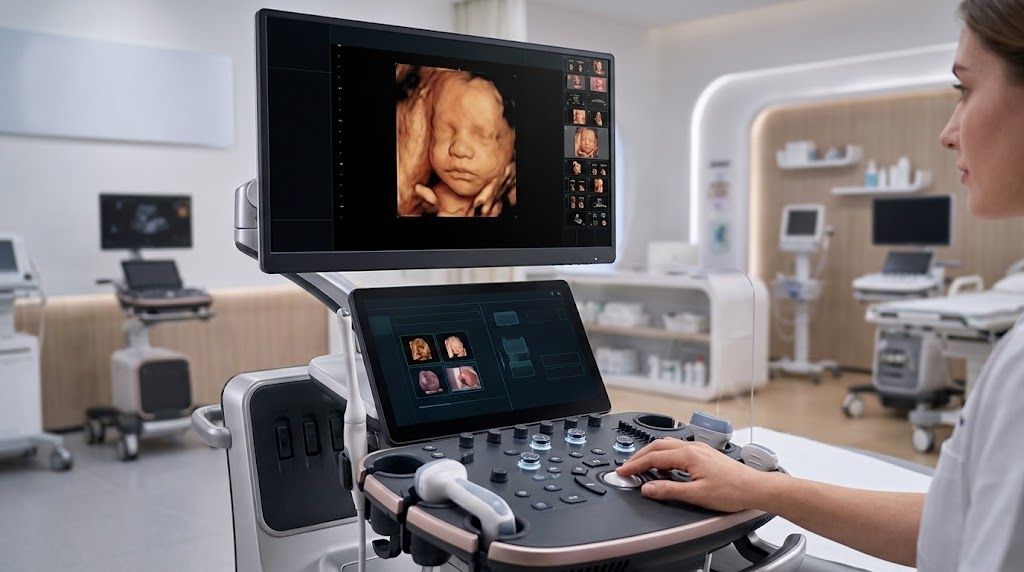
A generic obstetric ultrasound presentation may emphasize fetal visualization, advanced 3D/4D imaging, or other capabilities that are not central to a fertility clinic's daily work.
Those features may have value in certain environments.
However, a reproductive-medicine practice should also see how the machine performs the examinations that account for the greatest portion of its workload.
Consider requesting a demonstration that includes:
- Transvaginal ovarian imaging
- Follicle identification and measurement
- Endometrial visualization and measurement
- Automated measurement review and correction, where available
- Patient and examination documentation
- Image storage and retrieval
- Sonographer workflow and ergonomics
- Appropriate procedural functionality, if required
For organizations comparing multiple platforms, use the same clinical scenarios and evaluation criteria whenever possible.
This helps clinical teams distinguish meaningful performance differences from presentation quality.
The most impressive demonstration is not necessarily the one with the most advanced features.
It is the one that shows how effectively the equipment supports the clinic's everyday work.
Frequently Asked Questions About Fertility Ultrasound Equipment
What type of ultrasound machine is best for an IVF clinic?
The best system depends on the clinic's examination mix, patient volume, procedural requirements, staffing, and budget. Strong transvaginal imaging, efficient follicular assessment, measurement tools, documentation, and reliable service support are important considerations.
Do fertility clinics need 3D/4D ultrasound?
Not every fertility program requires advanced 3D/4D capabilities. These technologies may be useful for selected gynecologic or reproductive-medicine applications, but clinics should evaluate whether they are appropriate for their clinical services before purchasing additional software or transducers.
Is automated follicle counting worth the investment?
Automated follicle assessment may provide workflow value for clinics performing frequent monitoring examinations. Its usefulness depends on measurement performance, the ability to review and correct results, integration into documentation, and the clinic's actual examination volume.
Can a portable ultrasound machine be used in a fertility clinic?
Compact ultrasound systems may be appropriate for satellite monitoring, smaller examination rooms, or mobile applications when the specific configuration supports the intended clinical examinations. Transducer compatibility, imaging performance, connectivity, ergonomics, and service requirements should be verified.
Should fertility clinics purchase new or pre-owned ultrasound equipment?
Both may be appropriate depending on clinical requirements, software support, transducer condition, warranty coverage, and expected equipment life. The lowest initial price does not necessarily provide the best long-term value.
Build Your Fertility Ultrasound Strategy Around the Clinical Need
Choosing ultrasound equipment for a fertility clinic should begin with the work the organization performs.
For some clinics, the priority will be efficient follicle monitoring and consistent endometrial assessment.
For others, advanced imaging, procedural compatibility, multiple examination rooms, or multisite deployment may play a larger role.
The right ultrasound system should support those requirements while providing an appropriate balance of imaging performance, usability, technology, service, and long-term ownership value.
Preferred Medical works with women's health providers evaluating ultrasound technology from Philips, Mindray, and Alpinion.
Our consultative approach helps organizations assess clinical requirements, equipment configurations, transducers, workflow, acquisition options, applications training, and service support.
Whether you are opening a new fertility clinic, expanding an established IVF program, or replacing aging ultrasound equipment, the objective remains the same:
Choose technology that supports your clinical team, your patients, and the future of your practice.
Planning a fertility ultrasound equipment purchase?
Contact Preferred Medical to discuss ultrasound systems for reproductive medicine, follicular monitoring, and women's health imaging. Our team can help you evaluate the clinical capabilities, equipment configurations, and support options that best match your organization.

Should You Buy, Finance, or Lease an OB/GYN Ultrasound Machine in 2026? A Practice Acquisition Guide

How Many Scans Does It Take to Pay for an OB/GYN Ultrasound Machine? A 2026 ROI and Break-Even Guide