
St. Louis Women’s Healthcare Landscape: Where Clinical Excellence Meets Imaging Innovation
The St. Louis metropolitan area has emerged as a dynamic hub for women’s healthcare delivery, combining academic medicine, large integrated health systems, and specialized private practices to create a highly collaborative and patient-centered care environment. Across Eastern Missouri and Southwestern Illinois, leading providers are advancing obstetrics, gynecology, maternal-fetal medicine, reproductive endocrinology, and breast imaging through strategic investments in technology, multidisciplinary coordination, and expanded access to care.
For healthcare leaders and imaging stakeholders, St. Louis represents a compelling case study in how regional ecosystems can align clinical excellence with operational efficiency—particularly through the thoughtful deployment of advanced ultrasound and women’s imaging solutions.
A Strong Academic and Health System Foundation
At the core of the St. Louis healthcare landscape is a robust academic presence anchored by Washington University School of Medicine and its clinical affiliate, Barnes-Jewish Hospital, part of BJC HealthCare. This academic-health system partnership has long been a driver of innovation in women’s health, particularly in maternal-fetal medicine, gynecologic oncology, and advanced imaging protocols.
BJC HealthCare’s women’s services network integrates high-risk obstetrics, fetal imaging, and neonatal care across multiple facilities, enabling seamless care coordination for complex pregnancies. The system’s emphasis on standardized imaging protocols and subspecialty interpretation supports early detection and informed clinical decision-making—key factors in improving maternal and fetal outcomes.
In parallel, SSM Health operates a significant footprint in the region, including SSM Health St. Mary’s Hospital and SSM Health Cardinal Glennon Children’s Hospital. SSM Health has invested heavily in expanding access to women’s health services, particularly in underserved communities, while also advancing imaging capabilities in breast care and prenatal diagnostics.
Mercy Health, another major regional provider, continues to expand its Mercy Women’s Center model, which integrates OB/GYN care, imaging, and support services under one roof. This model reflects a broader industry shift toward comprehensive, patient-centered environments that reduce fragmentation and improve the overall care experience.
Ascension Missouri also plays a key role in the regional landscape, with a network of hospitals and outpatient centers that prioritize women’s health access points across urban and suburban communities. Their facilities increasingly incorporate advanced ultrasound platforms and digital imaging workflows to enhance diagnostic efficiency.
The Role of Advanced Ultrasound in Regional Care Delivery
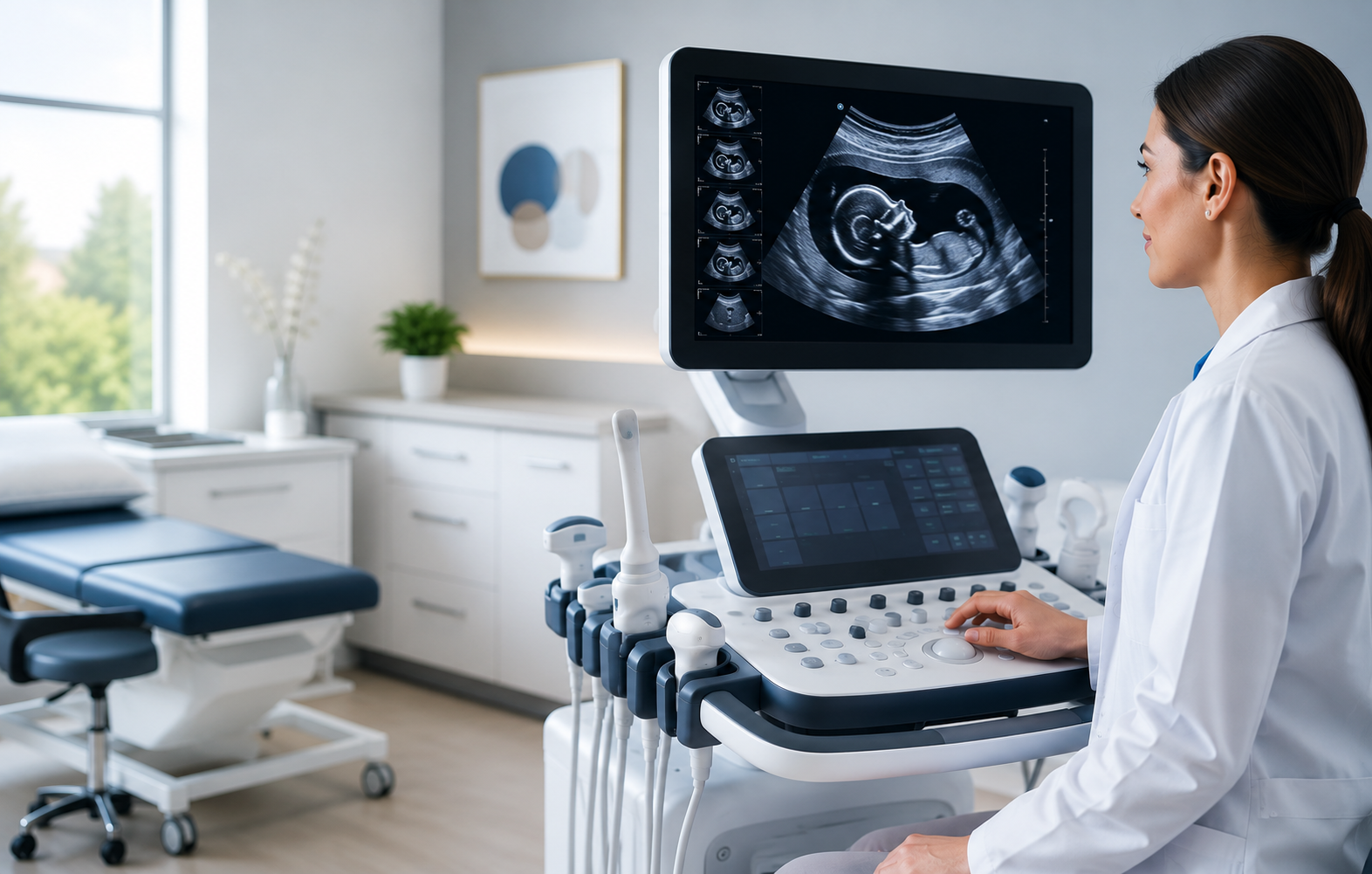
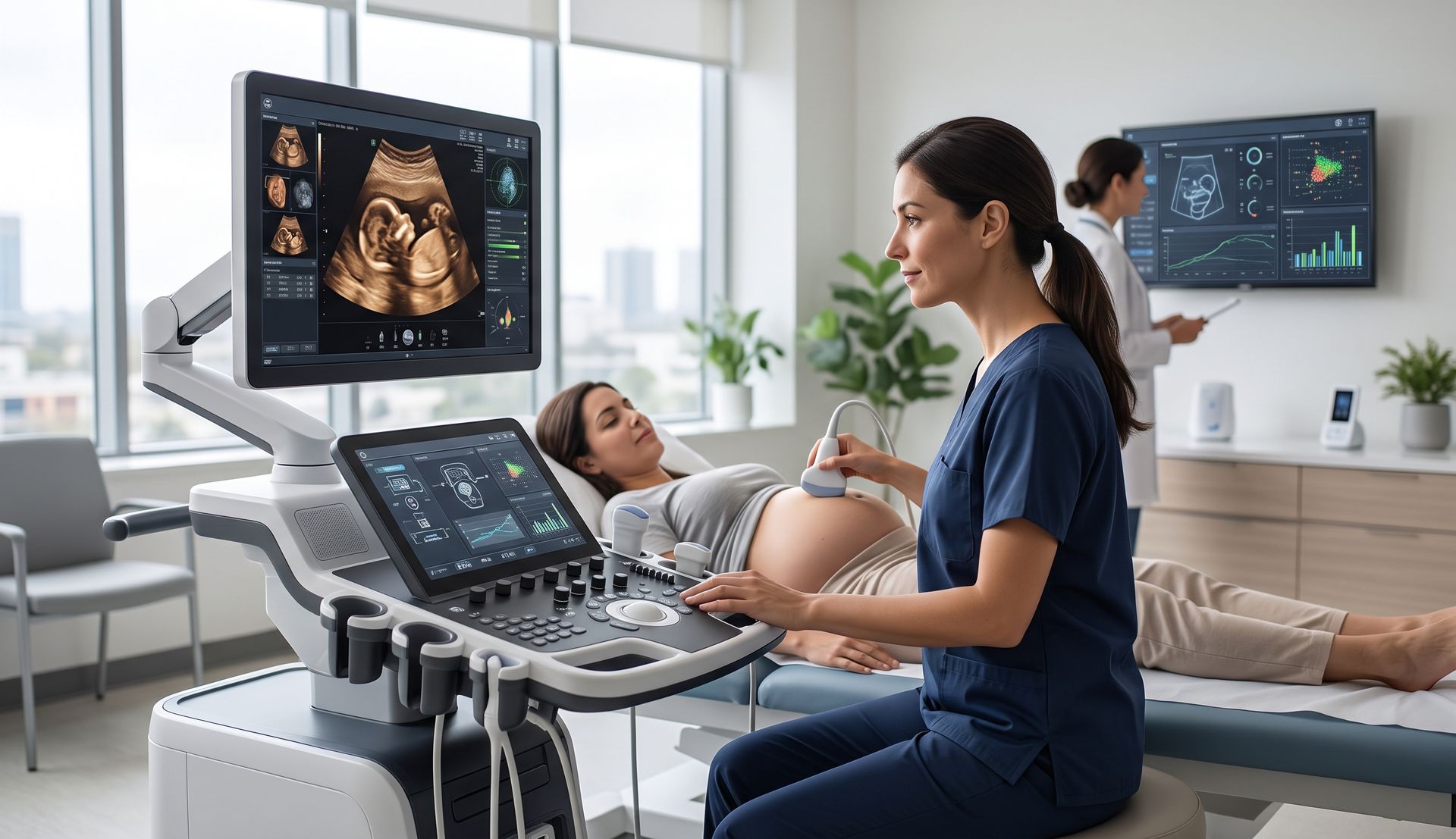
Across St. Louis, advanced ultrasound technologies are central to how providers deliver high-quality women’s healthcare. From routine obstetric scans to complex fetal anomaly detection, ultrasound serves as a foundational tool that connects multiple specialties and care settings.
Maternal-fetal medicine (MFM) programs throughout the region are leveraging high-resolution ultrasound systems with advanced Doppler capabilities, 3D/4D imaging, and AI-assisted workflow enhancements. These technologies allow for more precise visualization of fetal anatomy, improved detection of abnormalities, and better monitoring of high-risk pregnancies.
In large systems such as BJC and SSM Health, ultrasound is deeply integrated into care pathways, enabling real-time collaboration between sonographers, radiologists, and MFM specialists. This integration supports faster diagnosis, reduces repeat imaging, and enhances patient confidence.
Private practices and specialty groups are also adopting next-generation ultrasound platforms to remain competitive and meet rising patient expectations. High-quality imaging is no longer limited to hospital settings; it is increasingly available in outpatient clinics, fertility centers, and dedicated women’s imaging facilities.
Leading OB/GYN and Specialty Groups
Beyond major health systems, the St. Louis metro area is home to a diverse network of independent OB/GYN groups and specialty providers that contribute significantly to regional care capacity.
These practices often serve as the front line for women’s health services, managing routine care, prenatal visits, and initial diagnostic imaging. Many have invested in in-office ultrasound capabilities, allowing for immediate assessment and a more streamlined patient experience.
Maternal-fetal medicine practices in the region collaborate closely with both independent OB/GYNs and hospital systems, ensuring that high-risk patients receive timely referrals and coordinated care. This collaborative model is particularly important in managing complex pregnancies, where imaging plays a critical role in guiding treatment decisions.
Reproductive endocrinology and fertility centers in St. Louis are also advancing the use of ultrasound in assisted reproductive technologies. From follicular monitoring to early pregnancy assessment, imaging is integral to treatment success and patient engagement.
Breast imaging providers, including both hospital-based centers and independent facilities, continue to expand access to 3D mammography, automated breast ultrasound (ABUS), and image-guided biopsy services. These advancements support earlier detection and more personalized screening strategies, particularly for women with dense breast tissue.
Expanding Access and Addressing Disparities
Like many metropolitan areas, St. Louis faces ongoing challenges related to healthcare access and disparities in maternal and women’s health outcomes. Leading providers in the region are actively addressing these challenges through targeted outreach, community partnerships, and the expansion of services in underserved areas.
Mobile imaging units, community-based clinics, and telehealth-enabled consultations are helping extend the reach of women’s health services beyond traditional hospital settings. Ultrasound, in particular, plays a critical role in these efforts due to its portability and versatility.
Health systems are also focusing on improving care continuity through integrated electronic health records and centralized scheduling systems. These operational enhancements reduce barriers to care and ensure that patients can access imaging services in a timely manner.
Operational Efficiency and Workflow Innovation
As demand for women’s health services continues to grow, St. Louis providers are prioritizing operational efficiency and workflow optimization. Imaging departments are adopting AI-assisted tools to streamline scheduling, reduce scan times, and improve image quality.
Standardization of imaging protocols across multi-site health systems is another key trend. By aligning practices and ensuring consistency, providers can improve diagnostic accuracy while also enhancing training and quality assurance.
Data analytics is increasingly being used to monitor performance, identify bottlenecks, and inform strategic planning. For example, tracking ultrasound utilization rates and turnaround times can help organizations allocate resources more effectively and improve patient throughput.
These operational strategies are essential not only for managing current demand but also for positioning organizations for future growth.
The Strategic Importance of Imaging Partnerships
In a competitive and rapidly evolving healthcare environment, partnerships play a crucial role in enabling providers to stay at the forefront of innovation. Imaging partners bring expertise in technology selection, implementation, training, and ongoing support—helping organizations maximize the value of their investments.
For women’s health providers in St. Louis, working with a consultative imaging partner can support a range of strategic objectives, including:
- Upgrading to advanced ultrasound platforms with enhanced imaging capabilities
- Integrating AI-driven workflow solutions to improve efficiency
- Expanding service lines in maternal-fetal medicine, fertility, and breast imaging
- Enhancing patient experience through faster, more accurate diagnostics
Preferred Medical works alongside healthcare organizations to assess their unique needs and develop tailored imaging strategies that align with both clinical and operational goals.
Looking Ahead: Continued Growth and Innovation
The future of women’s healthcare in the St. Louis metro area is shaped by continued investment in technology, workforce development, and collaborative care models. As providers seek to improve outcomes and expand access, imaging will remain a central component of their strategies.
Emerging technologies such as AI-assisted diagnostics, remote imaging interpretation, and advanced data integration are expected to further enhance the role of ultrasound and other imaging modalities. At the same time, the focus on patient-centered care will continue to drive innovation in how services are delivered and experienced.
For healthcare leaders, the St. Louis region offers valuable insights into how a diverse provider ecosystem can come together to advance women’s health. By aligning clinical excellence with operational efficiency and strategic partnerships, organizations can create sustainable models that benefit both patients and providers.
Partnering for the Future of Women’s Imaging
As women’s health providers in St. Louis continue to evolve, the importance of reliable, high-performance imaging solutions cannot be overstated. From early detection to complex prenatal care, imaging is a cornerstone of modern healthcare delivery.
Preferred Medical is committed to supporting providers across the region with consultative expertise, advanced imaging solutions, and a deep understanding of the unique challenges facing women’s health organizations today. By partnering with Preferred Medical, healthcare leaders can position their organizations for long-term success—delivering high-quality, efficient, and patient-centered care in an increasingly complex landscape.
To learn more about how Preferred Medical can support your organization’s imaging strategy, connect with our team to start the conversation.

Should You Buy, Finance, or Lease an OB/GYN Ultrasound Machine in 2026? A Practice Acquisition Guide

How Many Scans Does It Take to Pay for an OB/GYN Ultrasound Machine? A 2026 ROI and Break-Even Guide