
Top Women’s Ultrasound Healthcare Providers in the Raleigh, NC Metro Area
The Raleigh, North Carolina metro area has become one of the Southeast’s most important healthcare markets for women’s imaging, obstetrics, gynecology, maternal-fetal medicine, breast health, and outpatient diagnostic services. With the Raleigh-Cary metro serving more than 1.56 million residents, women across Raleigh, Cary, Wake Forest, Garner, Holly Springs, Apex, Fuquay-Varina, Clayton, Knightdale, and surrounding communities need convenient access to ultrasound services that support care across every stage of life.
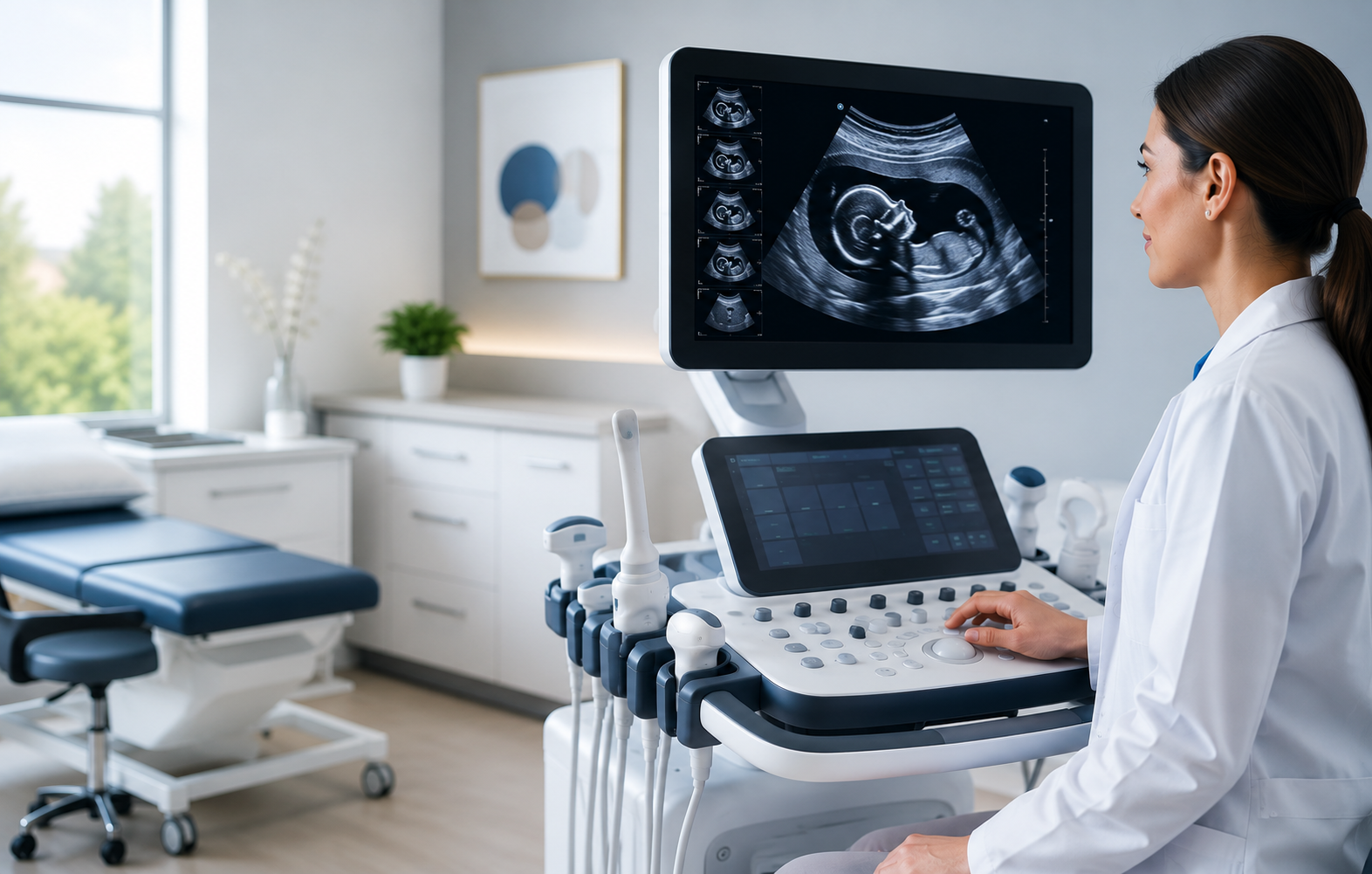
For patients and referring providers, ultrasound is often one of the first-line imaging tools used in women’s healthcare. In pregnancy, the American College of Obstetricians and Gynecologists notes that patients typically receive at least one standard ultrasound exam, often performed between 18 and 22 weeks, while additional studies may be recommended depending on clinical circumstances. Ultrasound also plays a key role outside pregnancy, helping physicians evaluate pelvic pain, abnormal bleeding, ovarian cysts, uterine fibroids, fertility concerns, breast findings, and procedural guidance. Because ultrasound does not use ionizing radiation, it is widely used in obstetric and gynecologic care when clinically appropriate; ACOG states that ultrasonography and MRI are the imaging techniques of choice for pregnant patients when imaging is needed.
The following Raleigh-area providers are presented in a non-ranked overview. “Top” in this context refers to organizations with a visible regional presence, women’s health focus, ultrasound capabilities, maternal-fetal medicine expertise, breast imaging access, outpatient convenience, or integration with major health systems. This is not a formal endorsement or quality ranking.
Duke Women’s Health and Duke Raleigh Imaging Services
Duke Health is one of the most recognizable names serving women’s healthcare in the Triangle, and its Raleigh-area presence makes it an important option for women seeking coordinated OB/GYN care and imaging access. Duke Women’s Health Raleigh provides reproductive care for women across life stages, including obstetric and gynecologic services. Its Raleigh women’s health location notes that it performs first-trimester sonograms and provides care for high-risk pregnancies in partnership with specialists.
Duke Women’s Health Associates at Brier Creek is another key access point for women in the Raleigh metro. The practice lists complete obstetric care, routine gynecologic care, contraceptive services, ultrasound, and menopausal care among its services. For patients who need broader imaging, Duke Raleigh Imaging Services lists ultrasound among its radiology and imaging services, along with mammography, MRI, CT, X-ray, nuclear medicine, and interventional radiology.
What makes Duke significant in the Raleigh women’s ultrasound landscape is the combination of OB/GYN care, hospital-system resources, specialty collaboration, and diagnostic imaging access. For expectant mothers, women with complex gynecologic concerns, or patients whose care may require multiple specialists, Duke’s integrated model can help connect ultrasound findings to a broader clinical plan.
WakeMed Maternal-Fetal Medicine and WakeMed Imaging
WakeMed is deeply embedded in Raleigh and Wake County healthcare, and its women’s health and imaging services are central to the region’s ultrasound landscape. WakeMed’s ultrasound service explains that sonography uses high-frequency sound waves to produce dynamic images of organs, tissue, and blood flow, and describes ultrasound as a routine procedure used to help physicians diagnose and treat medical conditions.
WakeMed is especially important for patients who need maternal-fetal medicine services. WakeMed Maternal Fetal Medicine at Raleigh Medical Park states that it provides specialty care for pregnancies, including high-risk maternal or fetal conditions, and offers advanced prenatal diagnosis with comprehensive ultrasound, genetic counseling, and potential therapeutic interventions. WakeMed also lists maternal-fetal medicine locations at Raleigh Medical Park and North Raleigh, expanding access across the metro area.
For women with high-risk pregnancies, ultrasound quality is not only about image clarity; it is about physician interpretation, fetal assessment, care coordination, and timely decision-making. WakeMed’s maternal-fetal medicine program is positioned for patients who may need detailed fetal anatomy evaluation, fetal growth monitoring, placental assessment, fetal echocardiography, genetic counseling, or follow-up imaging tied to complex pregnancy care.
UNC Maternal-Fetal Medicine Raleigh and UNC Health Rex
UNC Health also plays a major role in women’s ultrasound and maternity care across the Raleigh metro area. UNC Maternal-Fetal Medicine Raleigh lists services that include maternal-fetal consultation, high-risk prenatal care, prenatal diagnosis, ultrasound, fetal echo, CVS, amniocentesis, inpatient monitoring, genetic testing, and counseling for fetal anomalies.
For women delivering or receiving care through UNC Health Rex, imaging is part of a larger women’s health ecosystem that includes maternity services, OB/GYN care, breast health, and outpatient diagnostics. UNC Health Rex’s ultrasound page states that outpatient ultrasound is provided by Wake Radiology UNC Health Rex and that ultrasound is used for diagnostic imaging as well as ultrasound guidance for biopsies and procedures.
UNC Health Rex is particularly relevant for patients who value the combination of hospital-based women’s health services and outpatient imaging access. In a fast-growing region like Raleigh, this coordination matters. Patients may begin with routine prenatal or gynecologic care, need diagnostic ultrasound, and then require follow-up with maternal-fetal medicine, surgery, oncology, or breast imaging specialists. A system that connects those services can reduce friction in the patient journey.
Wake Radiology UNC Health Rex
Wake Radiology UNC Health Rex is one of the most important outpatient imaging providers in the greater Triangle. Its official site describes the organization as providing accredited outpatient medical imaging at multiple locations throughout the greater Triangle. The UNC Rex and Wake Radiology partnership was designed to expand access to specialized imaging, including outpatient MRI, CT, X-ray, ultrasound, and 3D mammography across the region.
For women’s ultrasound care, Wake Radiology UNC Health Rex is relevant because of its outpatient footprint and its connection to UNC Health Rex. Patients who need pelvic ultrasound, breast ultrasound, ultrasound-guided procedures, or other diagnostic imaging can often benefit from outpatient scheduling, multiple locations, and radiologist interpretation within a specialized imaging network.
In women’s imaging, access and efficiency are major factors. A patient with a new breast concern, abnormal pelvic symptoms, or a follow-up need after a clinical exam may not want to wait weeks or travel across the region. Outpatient imaging networks help close that gap by bringing ultrasound and breast imaging closer to where patients live and work.
Raleigh Radiology
Raleigh Radiology is another notable imaging provider serving Wake and surrounding counties. The group states that it provides expertise in women’s and pediatric imaging, as well as musculoskeletal, abdominal, neuroradiology, nuclear medicine, interventional, and vascular radiology. Its ultrasound page lists multiple locations across the Raleigh region, including Raleigh, Cary, Clayton, Fuquay-Varina, Holly Springs, Knightdale, and Wake Forest.
For patients, the value of a radiology-focused provider is subspecialty imaging expertise and location convenience. Women may be referred for pelvic ultrasound, abdominal ultrasound, breast imaging follow-up, or ultrasound-guided procedures. In those situations, the quality of the imaging exam depends on experienced sonographers, appropriate protocols, high-quality equipment, and clear radiology reporting back to the referring clinician.
Raleigh Radiology’s regional footprint makes it a strong consideration for women who need diagnostic ultrasound outside a hospital campus. This is especially important in suburban communities where population growth has increased demand for convenient imaging appointments.
Centre OB/GYN
Centre OB/GYN is a Raleigh-based women’s healthcare practice that offers on-site diagnostic services, including ultrasounds and bone density assessments. For many patients, having ultrasound available within an OB/GYN practice can make care more seamless. Instead of being referred to a separate imaging site for every ultrasound need, patients may be able to complete certain exams in a familiar clinical setting.
This model is especially valuable for pregnancy care, gynecologic problem visits, and follow-up evaluations. When ultrasound is integrated into the OB/GYN office, physicians can connect imaging results with symptoms, exam findings, and patient history more directly. That coordination can improve the patient experience and support faster clinical decision-making.
Raleigh OB/GYN Centre
Raleigh OB/GYN Centre is another established Raleigh women’s health practice with a visible ultrasound offering. Its pregnancy care page lists viability ultrasound, prenatal genetic screening, and high-risk obstetrics among pregnancy-related services. United Women’s Healthcare’s Raleigh OB/GYN Centre profile also lists ultrasound for OB and GYN care.
For women looking for continuity across pregnancy and gynecologic care, Raleigh OB/GYN Centre represents the kind of practice where ultrasound is connected to broader women’s health management. Viability scans, anatomy-related referrals, follow-up imaging, and gynecologic ultrasound can all play a role in helping clinicians monitor reproductive health.
Triangle Physicians for Women
Triangle Physicians for Women, based in Cary, serves an important part of the Raleigh metro’s western and southern suburbs. Its pregnancy information page notes that the practice offers an anatomy ultrasound to patients between 18 and 22 weeks, describing the scan as an opportunity to evaluate fetal development and detect abnormalities. Its ultrasound page also identifies ultrasound as part of its advanced imaging services.
For Cary, Apex, Morrisville, Holly Springs, and nearby communities, access to OB/GYN ultrasound outside downtown Raleigh is essential. Triangle Physicians for Women fits into the regional landscape by offering women’s healthcare and ultrasound access in a high-growth suburban corridor.
Associates in Women’s Healthcare
Associates in Women’s Healthcare is a Raleigh OB/GYN practice that presents itself as “Healthcare for Women By Women” and lists pregnancy, gynecology, procedures and surgery, 3D/4D ultrasound, and 3D mammography among its services. The combination of obstetric ultrasound, gynecologic care, and mammography access is meaningful for patients who want a more comprehensive women’s health setting.
For patients, 3D/4D ultrasound may be part of an obstetric imaging experience, while mammography and breast imaging services support preventive and diagnostic care beyond pregnancy. In a women’s health practice, these services can help create a more unified experience across reproductive care, pregnancy, wellness, and breast health.
Wake Women’s Health
Wake Women’s Health is another Raleigh-area women’s health practice that lists care for pregnancy planning, contraception, infertility, irregular periods, menopause, incontinence, endometriosis, pelvic pain, cancer, and other reproductive health concerns. The practice also states that its on-site laboratory offers ultrasound, CT scans, X-ray, bone density testing, and blood work.
This broad service mix makes Wake Women’s Health relevant for patients whose ultrasound needs may be tied to gynecologic symptoms, fertility concerns, menopause-related issues, or chronic pelvic conditions. On-site imaging can be a significant convenience when women are seeking answers for symptoms that may require both clinical evaluation and diagnostic imaging.
What Patients and Referring Providers Should Look For
When evaluating women’s ultrasound providers in the Raleigh metro area, the best choice depends on the patient’s clinical need. A routine pregnancy ultrasound, a high-risk fetal assessment, a pelvic ultrasound for abnormal bleeding, a breast ultrasound after a mammogram finding, and an ultrasound-guided biopsy all require different workflows and expertise.
Patients should consider whether the provider offers OB ultrasound, GYN ultrasound, breast ultrasound, maternal-fetal medicine, ultrasound-guided procedures, or hospital-system coordination. They should also ask whether their exam will be interpreted by a radiologist, OB/GYN physician, or maternal-fetal medicine specialist, depending on the type of ultrasound. For pregnancy care, patients should follow their OB/GYN or midwife’s recommendations about timing and medical necessity. For breast or pelvic imaging, patients should work with their referring clinician to ensure the right exam is ordered.
The Raleigh Metro Is Well Positioned for Women’s Imaging Growth
The Raleigh metro area has a strong women’s ultrasound ecosystem because it includes major academic and regional health systems, high-risk pregnancy specialists, outpatient imaging networks, and private OB/GYN practices. Duke Health, WakeMed, UNC Health Rex, Wake Radiology UNC Health Rex, Raleigh Radiology, Centre OB/GYN, Raleigh OB/GYN Centre, Triangle Physicians for Women, Associates in Women’s Healthcare, and Wake Women’s Health all contribute to a broader care network that supports women across pregnancy, gynecology, fertility, breast health, and preventive care.
As the region continues to grow, demand for accessible, high-quality ultrasound services will continue to rise. The strongest providers will be those that combine advanced imaging technology, skilled sonographers, clear reporting, physician collaboration, compassionate patient experiences, and convenient access across Raleigh and its surrounding communities. For women navigating healthcare decisions in the Triangle, the Raleigh metro offers a diverse and capable network of ultrasound providers ready to support care at every stage of life.
How Preferred Medical Supports Women’s Imaging Excellence
As women’s healthcare needs continue to grow across the Raleigh metro area, providers are under increasing pressure to deliver imaging services that are accurate, efficient, accessible, and patient-centered. From OB/GYN practices and maternal-fetal medicine programs to outpatient imaging centers and hospital-based women’s health departments, ultrasound technology plays a vital role in supporting confident clinical decisions and a better patient experience.
Preferred Medical works with women’s health providers to help strengthen ultrasound programs through a consultative, solutions-focused approach. Whether an organization is expanding obstetric ultrasound capacity, upgrading gynecologic imaging systems, improving breast ultrasound workflows, or planning technology investments for a growing practice, Preferred Medical understands the importance of aligning equipment, clinical needs, staff workflow, and long-term service goals.
For healthcare leaders, choosing the right ultrasound platform is not simply a purchasing decision. It is a strategic investment in diagnostic confidence, operational efficiency, provider satisfaction, and patient care. Preferred Medical helps practices and imaging teams evaluate options with those priorities in mind, supporting smarter decisions for today’s clinical demands and tomorrow’s growth.
As the Raleigh region continues to expand, women’s imaging providers will need technology partners who understand both the clinical and business sides of healthcare delivery. Preferred Medical is committed to supporting that progress by helping organizations advance imaging quality, improve access, and build stronger women’s health programs.
To learn more about ultrasound solutions for women’s imaging, OB/GYN, maternal-fetal medicine, breast health, and outpatient care, connect with Preferred Medical and explore how the right technology strategy can support better care across every stage of a woman’s health journey.

Should You Buy, Finance, or Lease an OB/GYN Ultrasound Machine in 2026? A Practice Acquisition Guide

How Many Scans Does It Take to Pay for an OB/GYN Ultrasound Machine? A 2026 ROI and Break-Even Guide