
How to Choose the Right OB-GYN Ultrasound Machine in 2026: A Buyer’s Guide for Growing Practices
Choosing an OB-GYN ultrasound machine is not simply a matter of comparing model names, image galleries, or equipment prices. It is a strategic decision that can influence clinical workflow, sonographer efficiency, examination consistency, patient scheduling, staff satisfaction, and the services a practice can offer in the future.
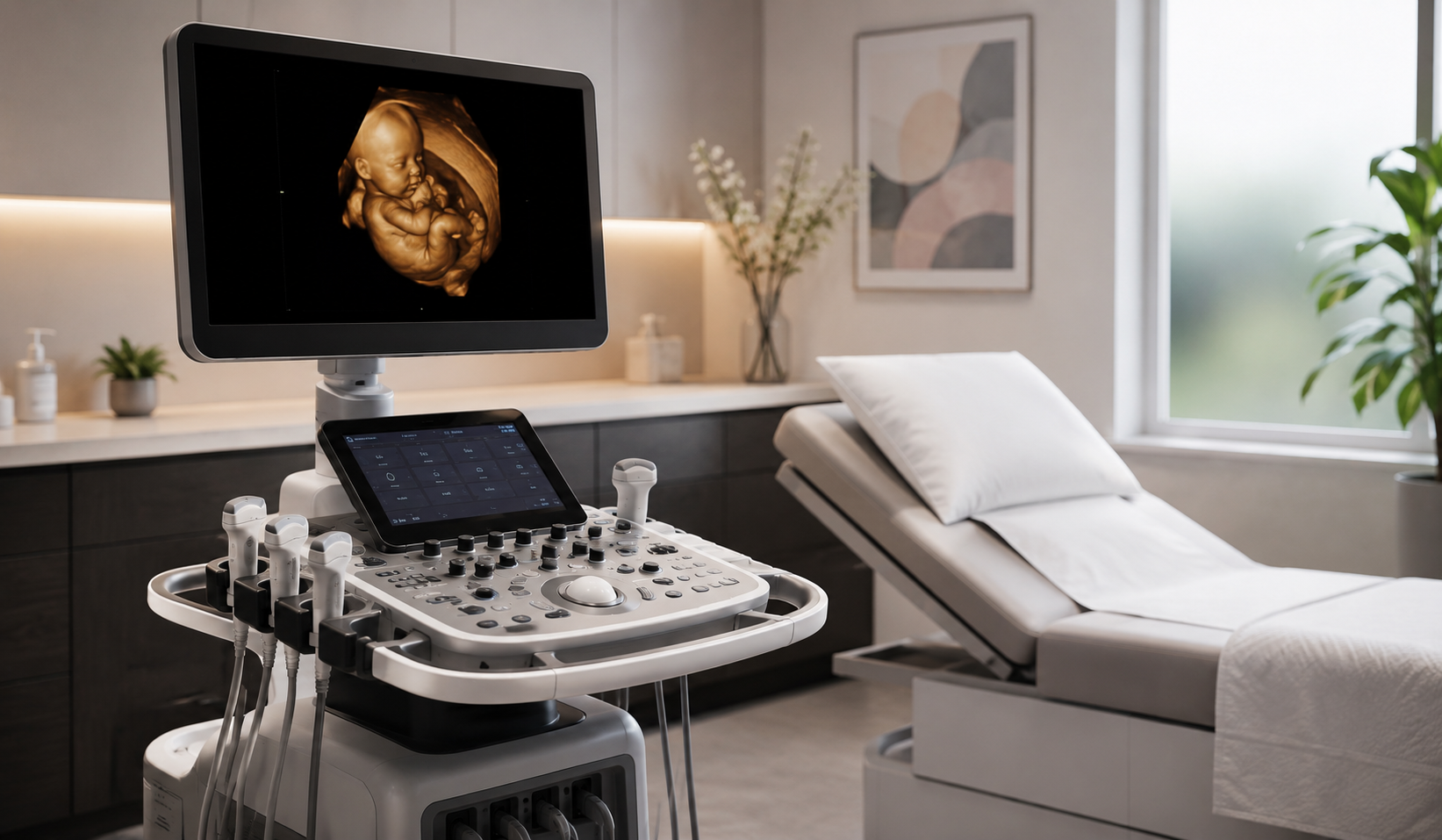
That decision has become more complex in 2026. Women’s health ultrasound systems may now include advanced 3D/4D visualization, automated obstetric measurements, AI-assisted workflow tools, specialized Doppler applications, follicular assessment, structured reporting, remote collaboration, and broader connectivity options. Philips and Mindray, for example, currently promote ultrasound platforms with automation and AI-assisted features intended to streamline repetitive imaging tasks and support workflow consistency.
However, the machine with the longest feature list is not automatically the right machine for every practice.
A growing private OB/GYN group may need reliable routine obstetric and pelvic imaging with room to expand. A fertility clinic may prioritize transvaginal resolution and follicle-measurement efficiency. A maternal-fetal medicine program may require advanced fetal cardiac, Doppler, and volume-imaging capabilities. A multispecialty imaging center may need one platform that can support women’s health, breast, vascular, and general imaging.
The right selection process begins with the way the practice operates—not with the equipment brochure.
Start With Your Clinical and Operational Goals
Before evaluating systems, define what the ultrasound program needs to accomplish today and what it may need to support during the next three to five years.
Document the examinations currently performed, the studies the practice refers elsewhere, anticipated patient volume, staffing plans, new service lines, additional locations, and any clinical capabilities the organization expects to introduce.
Important questions include:
- Which obstetric and gynecologic examinations will be performed?
- Will the system support routine OB/GYN, fertility, high-risk obstetrics, pelvic-floor imaging, breast imaging, or multiple specialties?
- How many examinations are expected each day?
- Will physicians scan, sonographers scan, or both?
- Does the practice plan to add providers or examination rooms?
- Will equipment need to move between rooms or locations?
- Is 3D/4D imaging clinically important to the program?
- Which reporting, PACS, worklist, or electronic health record systems must be connected?
- What level of training and post-installation support will the team require?
- How long does the organization expect to operate the system?
Professional practice parameters can also help organizations identify the imaging, documentation, quality-assurance, safety, and equipment-performance requirements their programs must support. The American Institute of Ultrasound in Medicine publishes parameters for obstetric, gynecologic, reproductive-medicine, and other ultrasound examinations, as well as accreditation standards addressing personnel, reporting, equipment maintenance, calibration, safety, and quality assurance.
The goal is not to purchase every available feature. It is to select a platform that supports the practice’s defined examinations, protocols, users, workload, and quality expectations.
Match the System to the Practice Type
Different clinical environments place different demands on ultrasound equipment.
| Practice environment | Likely priorities | Common system profile |
|---|---|---|
| General OB/GYN practice | Reliable abdominal and transvaginal imaging, efficient measurements, straightforward reporting, manageable operating costs | Mid-range cart-based or capable compact system |
| Maternal-fetal medicine program | Premium fetal imaging, advanced Doppler, fetal cardiac tools, specialized probes, high system uptime | Advanced women’s health or premium MFM platform |
| Fertility clinic | Endovaginal image quality, follicular assessment, rapid measurements, procedure-room footprint | Women’s health system with strong reproductive-medicine workflow |
| Women’s imaging center | Pelvic and breast capability, high-frequency linear probes, elastography options, structured reporting | Shared-service or advanced multipurpose platform |
| Satellite or mobile location | Portability, fast startup, battery support, smaller footprint, dependable connectivity | Compact or portable ultrasound system |
| Multisite organization | Standardized equipment, consistent presets, centralized support, training across teams, fleet management | Scalable platform family with broad service coverage |
These profiles are starting points rather than fixed rules. A smaller practice may still require premium capabilities, while a hospital may choose a more focused women’s health platform for a dedicated department.
Define the Required Image Performance
Image quality should be evaluated in relation to the examinations the practice performs—not solely through manufacturer-provided images.
A system used primarily for routine obstetrics should be assessed for abdominal imaging, fetal biometry, Doppler sensitivity, early pregnancy studies, and efficient documentation. A gynecology-heavy practice should carefully evaluate endovaginal imaging, uterine and adnexal visualization, color and spectral Doppler, and the ability to assess technically challenging anatomy.
Maternal-fetal medicine teams may place greater emphasis on first-trimester detail, fetal cardiac imaging, advanced Doppler, high-resolution volume acquisition, multiple-gestation workflow, and specialized fetal measurements. Fertility clinics may focus more heavily on follicle visualization, endometrial assessment, repeatable measurements, procedure guidance, and examination throughput.
During a clinical demonstration, evaluate:
- Resolution and tissue uniformity
- Penetration across different patient body types
- Endovaginal image quality
- Color and spectral Doppler sensitivity
- Image stability when the transducer is moving
- Ease of optimizing difficult examinations
- Measurement speed and repeatability
- 3D/4D acquisition and rendering quality
- Preset consistency
- Image review and reporting workflow
Whenever feasible and appropriate under organizational policies, the clinicians and sonographers who will use the equipment should participate in the evaluation. Marketing images can demonstrate potential, but they cannot show how efficiently the system will perform in a specific clinical environment.
Choose the Correct Transducer Package
Transducers are among the most important components of an OB-GYN ultrasound configuration. A capable system paired with the wrong probes may not meet the practice’s clinical requirements.
A typical configuration may include:
- Endocavitary transducer: Used for transvaginal pelvic imaging, early pregnancy assessment, fertility studies, and other gynecologic applications.
- Curved-array transducer: Commonly used for abdominal obstetric and pelvic examinations.
- Volume transducer: Required for many 3D/4D obstetric and gynecologic applications.
- High-frequency linear transducer: May be needed for breast imaging, superficial structures, vascular studies, procedures, or selected maternal-fetal applications.
- Specialty transducers: Certain programs may require probes designed for fetal cardiac imaging, pediatric or neonatal applications, transperineal imaging, or other advanced examinations.
Buyers should confirm the exact transducer model, frequency range, condition, clinical compatibility, and warranty status of every probe included in a proposal.
They should also ask whether the system has enough active transducer ports for the daily workflow. Frequently disconnecting and reconnecting probes may slow examinations, create additional wear, and increase the chance of accidental damage.
For growing practices, probe planning should include both current examinations and realistic future services. Adding a compatible transducer later may be straightforward, but only when the platform already supports the required clinical package and software.
Evaluate Workflow Automation Carefully
Automation has become a major part of the 2026 ultrasound conversation. Current systems may offer automated fetal measurements, plane recognition, follicle calculations, image optimization, protocol guidance, annotation, and workflow assistance.
These tools can be valuable when they reduce repetitive steps and fit naturally into the practice’s protocols. They should not be purchased solely because they are labeled as artificial intelligence.
Evaluate each automation feature by asking:
- Does it address a frequent task?
- How much manual interaction does it still require?
- Can the user review and adjust the result?
- Does it work well across the practice’s patient population?
- Is it included in the system price or separately licensed?
- Does it create useful information for the final report?
- Will staff receive training on the feature?
- Does it make the examination more efficient in actual practice?
Philips currently markets AI-assisted workflow and quantitative measurement functions for portions of its EPIQ Elite and Affiniti portfolios. Mindray describes its Imagyn I9 women’s health system as including workflow, automation, ergonomic, battery, and serviceability features intended for women’s health environments. These examples illustrate the broader direction of current ultrasound technology, but individual features and availability should always be confirmed for the quoted configuration.
The best automation is not necessarily the most technically impressive. It is the automation the clinical team will use consistently.
Decide Between Cart-Based, Compact, and Portable Ultrasound
System format affects imaging capability, mobility, room design, ergonomics, and long-term flexibility.
Cart-Based Systems
Cart-based ultrasound platforms commonly provide larger monitors, more transducer ports, adjustable control panels, broader software packages, more storage, and greater processing capacity.
They are often a strong fit for:
- High-volume OB/GYN practices
- Maternal-fetal medicine programs
- Fertility centers
- Dedicated women’s imaging departments
- Practices performing advanced 3D/4D examinations
- Shared-service imaging centers
Their larger footprint requires appropriate room planning, but their ergonomics and capability may be better suited to repeated daily scanning.
Compact Systems
Compact systems can provide a balance between mobility and diagnostic capability. They may work well in private offices, satellite clinics, labor and delivery environments, smaller examination rooms, and practices that need to move equipment between locations.
Buyers should still evaluate monitor size, control accessibility, available probes, battery life, reporting tools, storage, processing performance, and advanced application support.
Handheld Systems
Handheld ultrasound can be useful for focused point-of-care assessments and selected bedside applications. It should not automatically be treated as a replacement for a fully configured diagnostic OB/GYN ultrasound platform.
A handheld device may not provide the probe selection, ergonomics, reporting capabilities, advanced measurements, 3D/4D imaging, storage, connectivity, or service structure required for a comprehensive women’s health program.
Make Sonographer Ergonomics Part of the Decision
Ultrasound equipment is used through repeated hand, wrist, shoulder, neck, and torso movements. A system that looks impressive in a showroom may be uncomfortable during a full clinical schedule.
Evaluate:
- Control-panel height and range of motion
- Monitor position and adjustability
- Reach to frequently used controls
- Transducer port placement
- Keyboard and touchscreen accessibility
- System maneuverability
- Cable management
- Chair and examination-table compatibility
- Noise level
- Ease of cleaning
- Space for accessories and documentation
Ask sonographers to perform realistic workflow sequences during the demonstration rather than evaluating only still images.
The equipment should accommodate different users and room arrangements. Growing practices should also consider whether the platform will remain comfortable as examination volume increases.
Confirm Reporting, Storage, and Connectivity
An ultrasound system must function as part of the practice’s broader information environment.
Before purchasing, involve information technology personnel, administrators, clinical users, biomedical staff, and outside integration vendors when appropriate.
Confirm requirements for:
- DICOM connectivity
- PACS communication
- Modality worklist
- Structured reporting
- Electronic health record integration
- Image and clip storage
- Data export
- User authentication
- Network security
- Remote support access
- Software updates
- Backup procedures
- Multisite connectivity
Ask which integration services are included in the proposal and which require additional configuration or third-party fees.
A lower-priced system may not represent the better value when extensive custom work is required to connect it to the practice’s existing reporting and image-management environment.
Compare New, Demonstration, and Refurbished Systems
Equipment condition can influence acquisition cost, warranty coverage, technology lifecycle, software availability, and future serviceability.
A New System May Be Appropriate When:
- The practice wants current hardware and software
- Advanced clinical applications are essential
- Long-term warranty coverage is a priority
- The system will be used at high volume
- Future upgrades are important
- The organization is standardizing several locations
- The practice expects a long ownership period
A Demonstration System May Be Appropriate When:
- The practice wants relatively current technology at a lower investment
- A suitable configuration is available
- System history and warranty terms are documented
- Minor cosmetic use is acceptable
- The installation timeline aligns with inventory availability
A Professionally Refurbished System May Be Appropriate When:
- The practice has a defined capital budget
- A proven platform meets the clinical requirements
- The equipment will support a satellite office or secondary room
- Advanced functionality is available at a lower acquisition cost
- Parts, probes, software, and service remain available
- Inspection, testing, service history, and warranty terms are documented
Preferred Medical states that its pre-owned systems are inspected and tested and that flexible warranty options are available. Buyers should still review the exact refurbishment process, system age, software revision, probe condition, service history, parts availability, included accessories, and post-sale support for the individual unit.
For a more detailed financial discussion, practices can also review OB/GYN Ultrasound Machine Cost in 2026: Pricing, Features, and Total Cost of Ownership.
Evaluate Training as Part of the Equipment
Advanced technology creates little value when staff members are not prepared to use it.
Applications training should address more than basic startup and button location. A complete implementation may include:
- System and transducer setup
- Image optimization
- Specialty-specific presets
- Measurements and calculations
- 3D/4D acquisition
- Doppler controls
- Reporting workflow
- Data management
- Automation tools
- User customization
- Examination-room workflow
- Follow-up optimization after the team gains experience
Ask whether training will be delivered on-site, virtually, or through a combination of formats. Confirm how many sessions are included, which staff members may attend, whether instruction is tailored to women’s health, and whether future employees can receive additional support.
Preferred Medical states that customized applications training is included with the systems it sells and offers on-site and virtual instruction, workflow optimization, and follow-up support. Exact training arrangements should be documented in the final proposal.
Review Warranty and Service Before Purchasing
Service should be evaluated before the first equipment problem occurs.
Ultrasound downtime can interrupt appointments, require rescheduling, create staff pressure, and potentially force a practice to redirect or outsource examinations.
Ask prospective vendors:
- How long is the warranty?
- Does it include labor, travel, parts, and transducers?
- Are preventive-maintenance visits included?
- Is remote troubleshooting available?
- What on-site response commitments are offered?
- Are local or regional engineers available?
- Are replacement probes or loaner systems available?
- Are software updates included?
- What support is available after the warranty expires?
- Can the service agreement be renewed at a predictable cost?
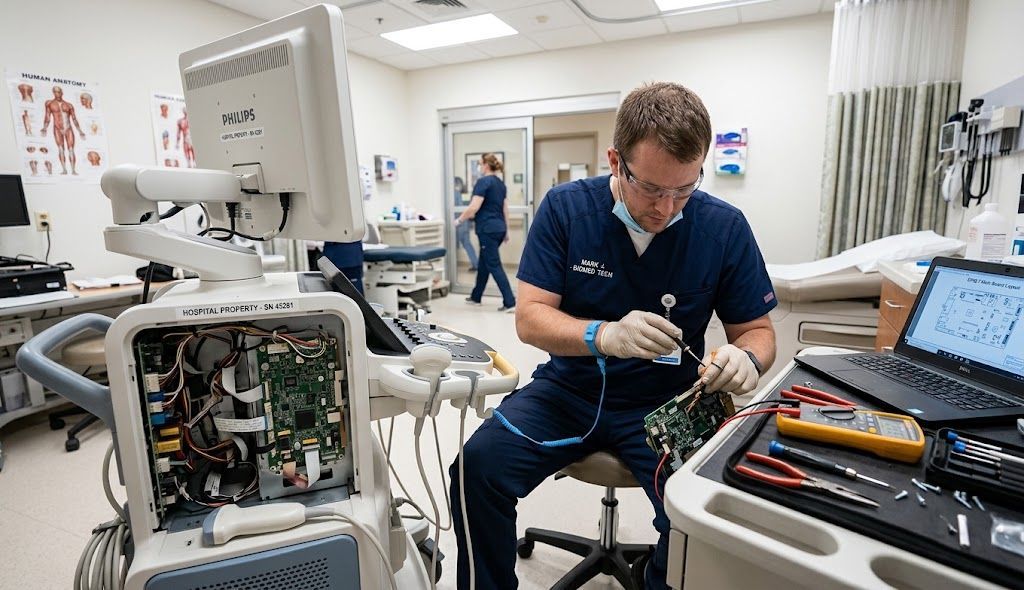
Preferred Medical describes its field-service offering as including remote diagnostics, preventive maintenance, flexible service plans, and access to regional and national support resources. Coverage and response terms may vary by system, manufacturer, location, and agreement, so buyers should confirm the details in writing.
A modest difference in purchase price may be less important than reliable support throughout the ownership period.
Conduct a Structured Clinical Demonstration
A product demonstration should function as a working evaluation, not a sales presentation.
Before the demonstration, give each vendor the same information about the practice’s examination mix, users, required probes, integrations, and growth plans. Ask each vendor to configure the system as closely as possible to the proposed purchase.
Create a scorecard covering:
| Evaluation category | Suggested questions |
|---|---|
| Image performance | Can users obtain the required views efficiently and consistently? |
| Transducers | Does the proposed probe package support every planned examination? |
| Workflow | How many steps are required for common measurements and documentation? |
| Automation | Do automated features save meaningful time in realistic cases? |
| Ergonomics | Can each user position the controls, monitor, and probes comfortably? |
| Reporting | Does information move into the required report and archive correctly? |
| Training | Is implementation support specific to the practice’s clinical needs? |
| Service | Who responds when the system or a transducer fails? |
| Scalability | Can the platform support additional providers, sites, or applications? |
| Ownership value | What is included over the full expected ownership period? |
Use the same scoring system for every vendor. Encourage physicians, sonographers, administrators, and information technology personnel to evaluate the areas most relevant to their responsibilities.
Plan for Growth Without Overbuying
Growing practices face two opposite risks: buying too little capability and buying more technology than they will realistically use.
Buying too little may require an early replacement when the practice adds providers, locations, higher-risk patients, fertility services, breast imaging, or more advanced procedures.
Buying too much can commit capital to software, probes, and applications that provide little practical value.
A balanced approach is to divide features into three groups:
- Required at installation: Features and probes needed for current examinations.
- Likely within three years: Capabilities tied to approved or realistic growth plans.
- Optional: Features that are interesting but not connected to an identified clinical or operational need.
Ask whether optional applications can be activated later and what hardware, software, training, or probe additions would be required. A scalable platform can allow the practice to expand without paying for every possible feature on day one.
Common OB-GYN Ultrasound Purchasing Mistakes
Choosing by Brand Name Alone
A respected manufacturer may offer several platforms with different capabilities, configurations, and support structures. The brand does not replace a clinical-fit evaluation.
Comparing Only Base Prices
A base price may not include every transducer, software package, integration service, warranty, training session, accessory, or delivery expense.
Excluding Sonographers From the Decision
Sonographers understand the daily effects of control placement, probe design, measurement workflow, presets, room arrangement, and examination volume.
Assuming Every 3D/4D Package Is Equivalent
Volume-transducer performance, rendering, acquisition speed, software tools, and workflow can differ substantially.
Overestimating the Value of Automation
Automation should solve a defined workflow problem. A feature that is rarely used does not create value simply because it is technologically advanced.
Underestimating Service and Training
Clinical performance depends on both reliable equipment and a team that knows how to optimize it.
Buying Only for Today’s Volume
A machine that meets minimum current requirements may become limiting when the practice adds clinicians, patients, sites, or clinical services.
Questions to Ask an Ultrasound Equipment Partner
Before approving a proposal, ask:
- Why is this configuration appropriate for our examination mix?
- Which transducers are included?
- Which features require separate licenses?
- Can software or probes be added later?
- Is the system new, demonstration, pre-owned, or refurbished?
- What is the manufacturing year and software revision?
- What training is included?
- Who provides field service in our location?
- What is covered by the warranty?
- Are transducers included in that coverage?
- How will the system connect with our reporting and storage environment?
- What installation work is included?
- Are preventive maintenance and software updates included?
- What happens when the warranty expires?
- What is the expected installation timeline?
- Is a trade-in available for existing equipment?
- What financing or leasing options are available?
- Can the proposed configuration be demonstrated before purchase?
A knowledgeable equipment partner should be able to explain not only what a system can do, but why its configuration fits the organization’s clinical, operational, and financial plans.
Frequently Asked Questions
What is the best ultrasound machine for an OB-GYN practice?
There is no single best system for every OB/GYN practice. The right machine depends on examination mix, patient volume, users, required transducers, image-performance expectations, reporting needs, available space, service requirements, budget, and growth plans.
Does every OB-GYN practice need 3D/4D ultrasound?
No. The value of 3D/4D depends on the practice’s clinical applications, workflow, referral patterns, and service strategy. Buyers should confirm that the package includes the appropriate volume transducer, software, visualization tools, storage, and training.
Is a portable system suitable for a growing practice?
It may be suitable when mobility, room size, or satellite coverage is a priority. The practice should still evaluate image quality, ergonomics, probes, reporting, connectivity, battery performance, service coverage, and expansion options.
Should a practice buy new or refurbished equipment?
Either option can be appropriate. New systems may offer current technology, longer warranty coverage, and clearer upgrade pathways. Refurbished systems may provide access to proven advanced technology at a lower acquisition cost when inspection, testing, software level, probe condition, serviceability, and warranty are properly documented.
Which ultrasound probes does an OB-GYN office need?
Many practices begin with a curved-array abdominal transducer and an endocavitary transducer. Volume, high-frequency linear, fetal cardiac, or other specialty probes may be needed depending on the examinations offered.
How important is ultrasound applications training?
Training is a central part of implementation. It helps users configure presets, optimize images, perform measurements, use advanced tools, complete documentation, and integrate the system into the practice’s workflow.
Choose the Right OB-GYN Ultrasound System With Preferred Medical
The right ultrasound machine is not necessarily the least expensive platform, the newest model, or the system with the largest number of features.
It is the system that supports the examinations your team performs, fits the way your practice operates, provides room for realistic growth, and is backed by dependable training and service.
Preferred Medical works with private OB/GYN practices, maternal-fetal medicine programs, fertility clinics, women’s imaging centers, hospitals, and multisite healthcare organizations to evaluate ultrasound technology based on clinical fit, workflow, configuration, service requirements, and long-term value.
Preferred Medical’s women’s health portfolio includes Philips, Mindray, and Alpinion ultrasound options, along with new, demonstration, and pre-owned equipment, applications training, field service, probe support, and equipment consultation.
Planning to equip, expand, or upgrade an OB/GYN ultrasound program in 2026? Request a personalized system comparison based on your examination mix, patient volume, transducer needs, workflow, growth plans, and budget.
Equipment features, availability, service terms, and configurations can change. Buyers should confirm all specifications, warranties, software packages, transducers, regulatory requirements, and clinical applications before purchase. Clinical equipment should be selected and operated in accordance with organizational protocols, applicable professional guidance, manufacturer instructions, and individual patient-care requirements.

Should You Buy, Finance, or Lease an OB/GYN Ultrasound Machine in 2026? A Practice Acquisition Guide

How Many Scans Does It Take to Pay for an OB/GYN Ultrasound Machine? A 2026 ROI and Break-Even Guide